
WordPress Development Trends You Need to Know in 2026
WordPress continues to dominate the web development landscape, powering over 40% of all websites globally. As we move through 2026, the platform is evolving at a rapid pace, driven by advances in artificial intelligence, block-based design, headless architecture, and performance optimization. Whether you’re a seasoned WordPress developer or just getting started, staying on top of these emerging trends is essential to building competitive, future-proof websites.
1. AI-Powered Tools and Automation
Artificial intelligence has become one of the most transformative forces in WordPress development. In 2026, AI-powered plugins and tools are being widely adopted to automate content creation, SEO optimization, image generation, and even customer support via smart chatbots. Developers are leveraging AI to speed up workflows, reduce manual tasks, and deliver smarter user experiences.
From intelligent site builders that suggest layouts based on your niche, to AI writing assistants integrated directly into the block editor, machine learning is reshaping how WordPress sites are built and managed. This trend is not slowing down — it’s accelerating.
2. Full Site Editing (FSE) and Block-Based Themes
WordPress’s Full Site Editing (FSE) feature, introduced with the block editor (Gutenberg), has now fully matured and is one of the most significant developments in the platform’s history. In 2026, block-based themes are the new standard, enabling developers and designers to visually customize every aspect of a site — from headers and footers to archive pages and templates — without writing a single line of code.
The Site Editor allows granular control over global styles, typography, colors, and layout, making it easier than ever to build pixel-perfect websites. Developers who master FSE and block theme development are in high demand as agencies and clients migrate away from older, classic themes.
3. Headless WordPress Architecture
Headless WordPress is gaining significant traction in 2026, especially among enterprise-level projects and development agencies looking to deliver blazing-fast, highly scalable digital experiences. In a headless setup, WordPress serves purely as a backend content management system (CMS), while the front end is powered by modern JavaScript frameworks such as Next.js, Nuxt.js, or Astro.
This decoupled approach offers several advantages:
- Significantly faster page load speeds through static site generation
- Greater flexibility to deliver content across multiple platforms and devices
- Improved security by reducing the attack surface of the WordPress backend
- Better developer experience using modern JavaScript tooling
With tools like WPGraphQL and the WordPress REST API, connecting a headless front end to WordPress has never been more streamlined.
4. Performance Optimization as a Core Priority
Site speed and Core Web Vitals continue to be critical ranking factors for Google in 2026. WordPress developers are placing performance optimization at the center of every project, not as an afterthought. Techniques such as lazy loading, image compression with next-gen formats like WebP and AVIF, server-side caching, and content delivery networks (CDNs) are now considered baseline requirements.
Additionally, tools like Cloudflare, WP Rocket, and Perfmatters are helping developers fine-tune performance metrics with minimal effort. The goal is clear: achieve the highest possible Lighthouse scores to boost search rankings and improve user retention.
5. Enhanced Security Practices
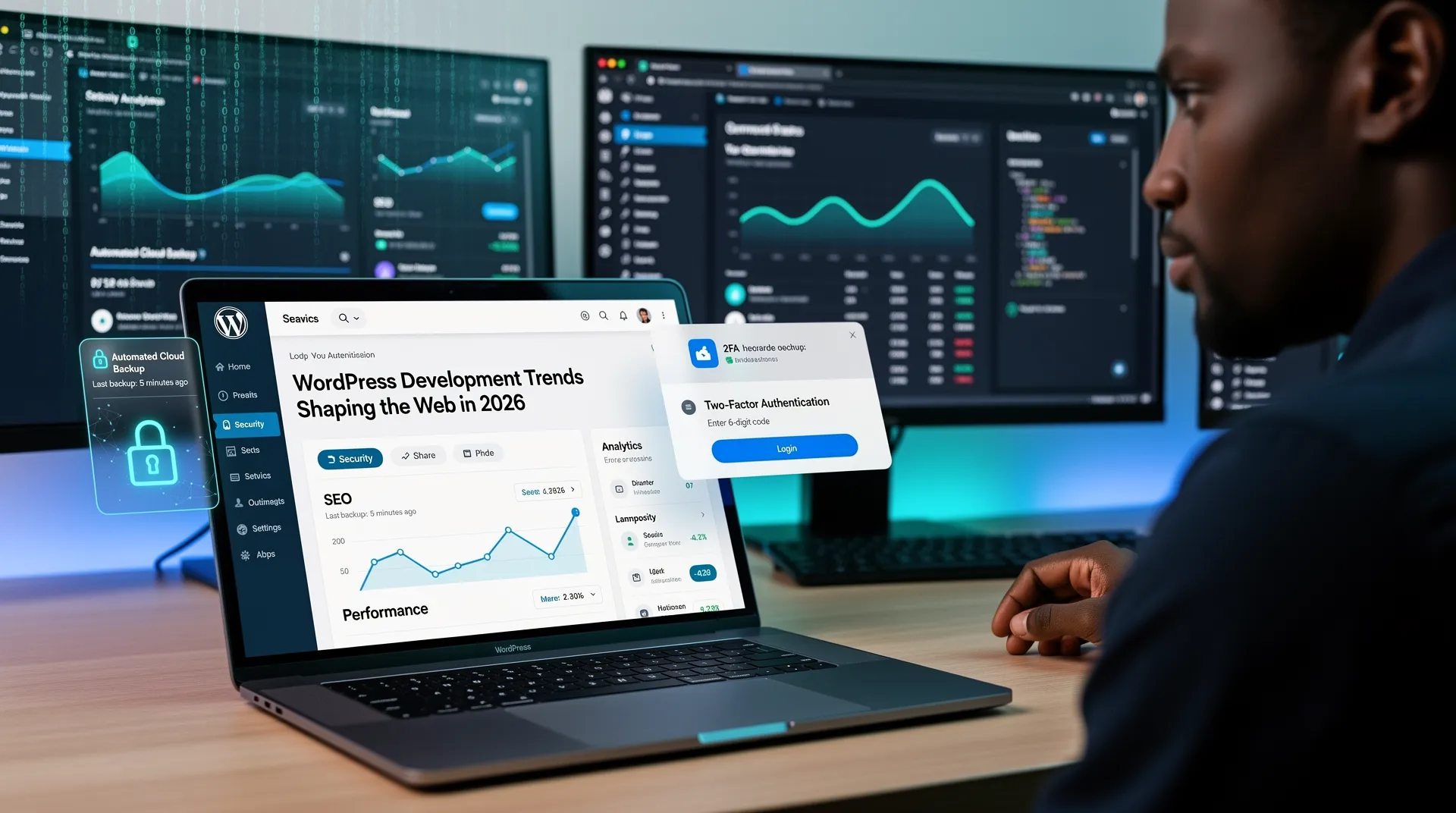
Cybersecurity threats targeting WordPress sites remain a serious concern in 2026. Given that WordPress is the most widely used CMS, it is also the most frequently targeted platform by hackers. Modern WordPress development now incorporates robust security practices from the ground up, including:
- Regular automated backups to offsite or cloud storage
- Two-factor authentication (2FA) for all admin accounts
- Web Application Firewalls (WAF) to filter malicious traffic
- Strict role-based access control and permissions management
- Timely updates to WordPress core, themes, and plugins
Security-first development is no longer optional — it’s a professional standard that clients expect from every WordPress developer.
6. WooCommerce and the Rise of Headless eCommerce
WooCommerce remains the most popular eCommerce solution for WordPress, and in 2026 it continues to evolve with new features and integrations. Headless WooCommerce setups, combining the flexibility of a decoupled front end with WooCommerce’s robust product and order management capabilities, are increasingly popular for high-traffic online stores that demand exceptional performance.
Additionally, WooCommerce’s expanded ecosystem of payment gateways, subscription tools, and product builders makes it a versatile solution for everything from small boutique stores to large-scale B2B marketplaces. Developers who specialize in WooCommerce customization and performance tuning are finding abundant opportunities in 2026.
7. Multilingual and Accessibility-First Development
As businesses expand their digital reach globally, multilingual WordPress development has become a key trend in 2026. Plugins like WPML, Polylang, and TranslatePress make it straightforward to build fully localized websites that cater to diverse audiences in multiple languages.
Equally important is the growing emphasis on web accessibility. Developers are designing WordPress sites to meet WCAG 2.2 guidelines, ensuring that content is usable by people with disabilities. Accessibility is not only a legal requirement in many regions but also a best practice that improves overall UX and SEO.
8. Low-Code and No-Code Solutions
The no-code movement has firmly taken root in the WordPress ecosystem. Page builders like Elementor, Bricks Builder, and Breakdance are empowering non-technical users to design and launch professional websites without needing to write code. In 2026, these tools have become even more sophisticated, with AI-assisted design suggestions, dynamic data integrations, and advanced conditional logic.
While low-code tools are not replacing professional developers, they are shifting the developer’s role toward building custom solutions, complex integrations, and performance-optimized architectures that low-code platforms cannot easily replicate.
9. Sustainability and Green Hosting
An emerging but increasingly important trend in 2026 is the focus on sustainable web development. WordPress developers and site owners are choosing green web hosting providers that run on renewable energy. Reducing a website’s carbon footprint through optimized code, fewer HTTP requests, and lightweight themes is becoming a point of professional pride and a marketing differentiator for agencies.
Final Thoughts
WordPress development in 2026 is defined by innovation, performance, and adaptability. From AI-powered automation and Full Site Editing to headless architecture and green hosting, the trends shaping this year present exciting opportunities for developers, designers, and business owners alike. Staying current with these developments is not just about keeping up — it’s about positioning yourself and your projects for long-term success in a rapidly evolving digital landscape.
Whether you’re building your first WordPress site or managing a portfolio of enterprise clients, embracing these trends will help you deliver faster, smarter, and more secure web experiences in 2026 and beyond.
No comments yet — be the first