
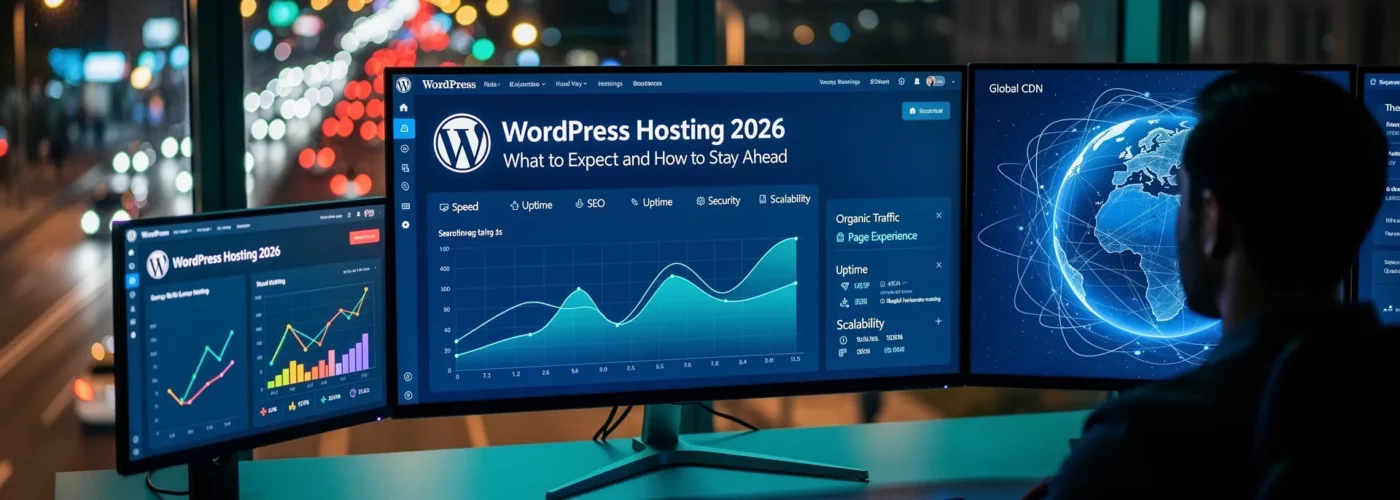
WordPress Hosting in 2026: The Landscape Is Shifting
WordPress continues to power more than 40% of the web, and in 2026, the hosting ecosystem around it has never been more dynamic. As performance expectations rise, security threats evolve, and AI-driven tools redefine workflows, WordPress hosting providers are under pressure to deliver faster, smarter, and more reliable infrastructure. Whether you’re a developer managing dozens of client sites or a business owner running a single storefront, understanding where WordPress hosting is headed can give you a meaningful competitive edge.
Below, we break down the most significant WordPress hosting trends shaping 2026 — and what they mean for you.
1. Managed WordPress Hosting Is Now the Standard
The days of raw, unmanaged server setups for WordPress are quickly fading. In 2026, managed WordPress hosting has become the go-to choice for professionals and businesses alike. These platforms handle everything from automatic updates and daily backups to security patching and performance optimization — freeing users to focus on content and growth rather than server maintenance.
What’s changed most noticeably this year is how managed hosting providers have expanded their feature sets. Staging environments, one-click cloning, developer tools like SSH and WP-CLI, and integrated CDN solutions are now considered baseline offerings rather than premium add-ons. The bar has been raised across the board.
Why It Matters
- Reduces technical overhead for agencies and freelancers
- Ensures sites stay secure and up-to-date automatically
- Delivers consistent performance without manual tuning
2. Performance Is a Non-Negotiable Priority
Google’s Core Web Vitals have been a central part of the ranking conversation for several years, but in 2026, page speed and performance are more mission-critical than ever. Users now abandon websites that take longer than two to three seconds to load, and search engines penalize slow sites accordingly.
Top-tier WordPress hosting providers have responded by investing heavily in edge caching, HTTP/3 support, and server-side rendering optimization. Many are also offering object caching via Redis or Memcached as a default feature, dramatically reducing database load and improving Time to First Byte (TTFB) scores.
Key Performance Technologies Trending in 2026
- Edge computing and CDN integration: Delivering content from nodes closest to the visitor
- HTTP/3 (QUIC protocol): Faster, more reliable connections — especially on mobile
- Redis object caching: Reducing repeated database queries for dynamic content
- Image optimization pipelines: Automatic conversion to WebP and AVIF formats
3. AI-Powered Hosting Tools Are Transforming Workflows
Artificial intelligence has made a decisive entry into the WordPress hosting space. In 2026, AI isn’t just a buzzword — it’s embedded into the tools that hosts and developers use every day. From AI-assisted malware detection and anomaly monitoring to intelligent resource scaling and chatbot-powered support, the technology is reshaping how hosting platforms operate.
Some providers are rolling out AI-driven performance advisors that analyze your WordPress site in real time and suggest configuration changes — from caching rules to plugin conflicts — before issues impact visitors. Others are using machine learning to predict traffic spikes and automatically allocate additional server resources ahead of demand.
AI Use Cases in WordPress Hosting
- Proactive threat detection using behavioral analysis
- Automated resource scaling based on predicted traffic patterns
- AI-generated support responses and troubleshooting guides
- Smart plugin and theme compatibility monitoring
4. Security Has Become a Core Infrastructure Feature

Cybersecurity threats targeting WordPress sites remain a persistent concern in 2026, and hosting providers have stepped up their defenses significantly. Rather than treating security as an optional add-on, leading hosts now bake it directly into their infrastructure.
Web Application Firewalls (WAF), DDoS mitigation, automatic malware scanning, and brute-force login protection are table-stakes features in modern WordPress hosting. Beyond that, providers are increasingly offering isolated hosting environments — where each WordPress installation operates in its own container — to prevent cross-site contamination in shared setups.
Two-factor authentication, SSL certificate management, and granular user permission controls are also being built directly into hosting dashboards, making it easier for non-technical users to maintain strong security postures without needing third-party plugins.
5. Sustainability and Green Hosting Are Gaining Ground
Environmental responsibility is no longer a niche concern — it’s a growing priority for businesses and consumers alike. In 2026, green WordPress hosting has moved from a marketing differentiator to a genuine expectation for many clients and organizations.
Hosting providers are increasingly powering their data centers with renewable energy sources, publishing carbon offset reports, and earning certifications from organizations like the Green Web Foundation. For agencies pitching to environmentally conscious clients, or businesses with ESG commitments, choosing a certified green host has become a real part of the decision-making process.
What to Look for in a Green Host
- Renewable energy certifications or Power Purchase Agreements (PPAs)
- Transparency in energy usage reporting
- Carbon neutrality commitments or offsets
- Data center efficiency ratings (PUE scores)
6. Developer Experience Is a Key Differentiator
In 2026, the best WordPress hosts aren’t just competing on uptime and speed — they’re competing on developer experience (DX). Agencies, freelancers, and in-house development teams are increasingly choosing hosting partners that fit seamlessly into modern development workflows.
This means native Git integration, support for local development tools like LocalWP and DevKinsta, CI/CD pipeline compatibility, and multisite management dashboards. Hosts that offer robust REST APIs for account management, site provisioning, and deployment automation are attracting developer-savvy customers who want infrastructure that bends to their workflow rather than the other way around.
Top Developer-Friendly Features in 2026
- Git-based deployments and version control integration
- Staging environments with one-click push to production
- WP-CLI access and SSH connectivity
- Multi-site management from a single dashboard
- API-driven site provisioning for agencies
7. Scalability on Demand Is Becoming the Norm
Whether it’s a flash sale, a viral news story, or a seasonal traffic surge, WordPress sites need to handle sudden spikes without going offline. In 2026, auto-scaling infrastructure has become a standard expectation rather than a luxury reserved for enterprise clients.
Cloud-based WordPress hosting architectures allow resources — CPU, RAM, and bandwidth — to scale up and down automatically in response to real-time traffic demands. This eliminates the need to over-provision expensive resources “just in case” and ensures visitors always get a smooth experience regardless of concurrent load.
Looking Ahead: Choosing the Right WordPress Host in 2026
The WordPress hosting market in 2026 is more mature, more competitive, and more feature-rich than ever before. The right host for your needs will depend on your technical requirements, budget, sustainability values, and the kind of support you expect. But one thing is clear: performance, security, AI integration, and developer experience have all become essential pillars — not optional extras.
As you evaluate your hosting options this year, prioritize providers who invest in infrastructure innovation, communicate transparently about their capabilities, and offer the flexibility to grow with your projects. The best WordPress hosting in 2026 isn’t just a place to put your files — it’s a strategic partner in your digital success.

No comments yet — be the first