

WordPress in 2026: The Evolution Continues
WordPress has long been the backbone of the internet, powering over 40% of all websites globally. As we move through 2026, the platform continues to evolve at a remarkable pace, introducing new features, embracing modern development paradigms, and responding to shifting user expectations. Whether you’re a developer, designer, or business owner, staying ahead of these trends is essential for building competitive, high-performing websites.
1. Full Site Editing (FSE) Becomes the New Standard
Full Site Editing, which began gaining traction in previous WordPress releases, has now matured into the go-to approach for building and customizing WordPress sites in 2026. With FSE, users can control every aspect of their website — from headers and footers to archive pages — all from within the block editor (Gutenberg). This eliminates the need for complex child themes and custom PHP templates in many scenarios.
Theme developers are now releasing block themes that are leaner, faster, and more flexible than traditional PHP-based themes. The WordPress theme directory is increasingly populated with FSE-compatible options, giving users unprecedented design freedom without touching a single line of code.
2. AI-Powered Tools Are Transforming WordPress Workflows
Artificial intelligence has firmly embedded itself into the WordPress ecosystem. In 2026, AI-powered plugins and integrations are not just novelties — they are essential productivity tools. From content generation and SEO optimization to image creation and chatbot integration, AI is reshaping how WordPress sites are built and managed.
- AI content assistants help writers draft, edit, and optimize blog posts directly within the WordPress editor.
- Smart SEO plugins now use machine learning to analyze content relevance, suggest keywords, and predict ranking potential.
- AI-driven image tools allow users to generate custom visuals without leaving the dashboard.
- Chatbots and virtual assistants powered by large language models are being embedded directly into WordPress sites to handle customer queries 24/7.
The integration of AI into WordPress is democratizing web development, enabling even non-technical users to build sophisticated, engaging online experiences.
3. Headless WordPress and Decoupled Architecture
Headless WordPress — where WordPress serves as a content backend via its REST API or GraphQL, while the front end is built with a modern JavaScript framework like Next.js, Nuxt, or Astro — continues to grow in popularity among developers in 2026. This approach decouples the content management system from the presentation layer, offering significant advantages in performance, scalability, and flexibility.
Agencies and enterprise clients are increasingly opting for headless setups because they allow:
- Blazing-fast page loads through static site generation and edge delivery.
- Omnichannel content distribution across web, mobile, and IoT devices.
- Greater developer freedom to choose the best frontend tools for each project.
While headless WordPress requires more technical expertise to set up and maintain, the ecosystem of tools supporting this approach — including WPGraphQL, Faust.js, and various hosting platforms — has matured considerably, making it more accessible than ever.
4. Performance Optimization Is No Longer Optional
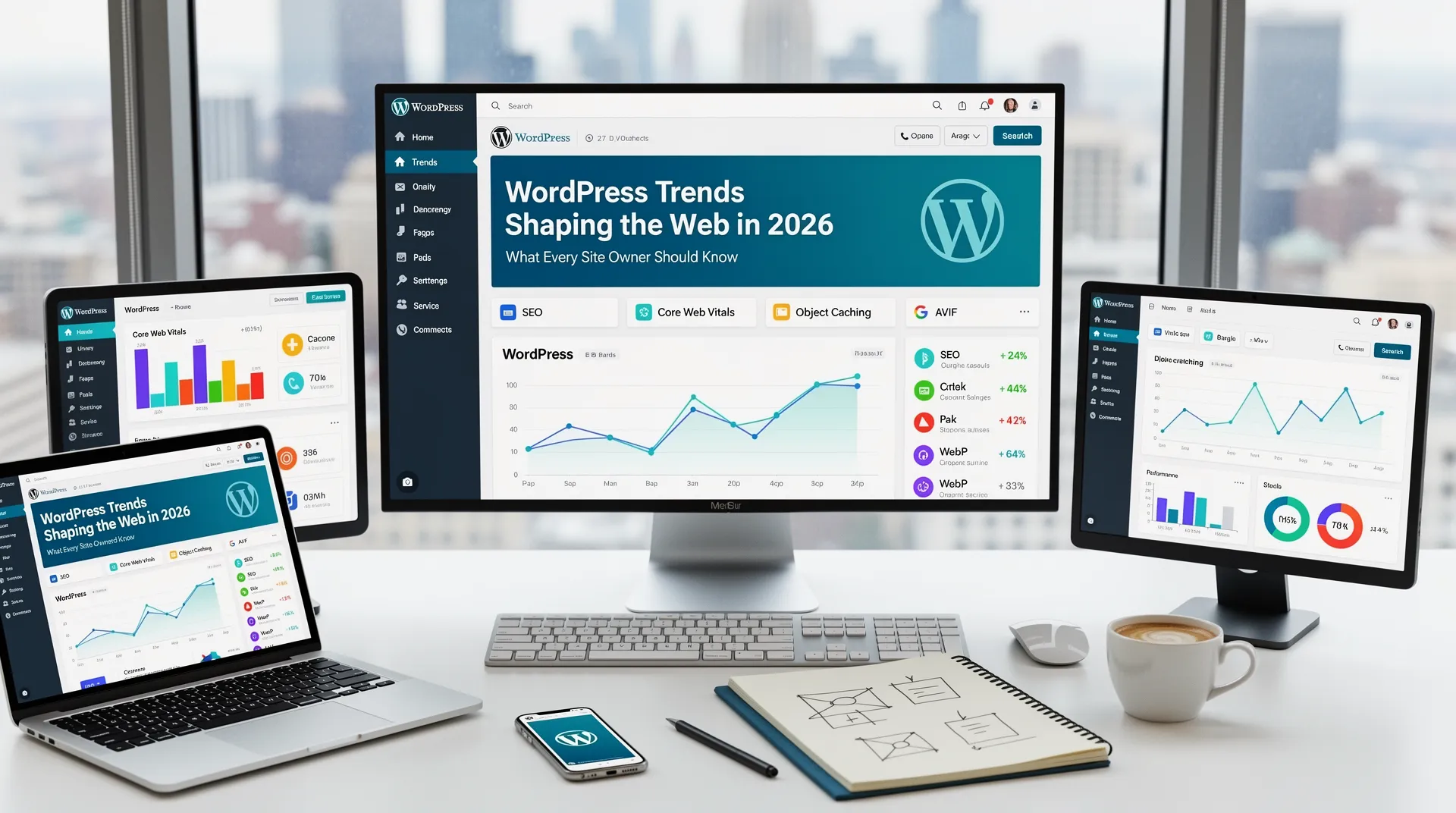
Core Web Vitals have become a critical ranking factor, and in 2026, WordPress performance optimization has moved from a “nice to have” to an absolute necessity. Google’s emphasis on page experience metrics means that slow-loading sites are increasingly penalized in search rankings, making speed a top priority for every WordPress site owner.
Key performance strategies dominating the WordPress space this year include:
- Object caching with tools like Redis or Memcached to reduce database queries.
- Image optimization through next-gen formats like WebP and AVIF, combined with lazy loading.
- Content Delivery Networks (CDNs) to serve assets from geographically closer servers.
- Lightweight themes and minimal plugin usage to reduce bloat and improve load times.
Managed WordPress hosting providers are also stepping up, offering built-in performance tools, automatic caching layers, and edge computing capabilities that make it easier to achieve top Core Web Vitals scores out of the box.
5. E-Commerce Expansion with WooCommerce and Beyond
WooCommerce remains the dominant e-commerce solution in the WordPress ecosystem, but 2026 is seeing a significant expansion in how WordPress-powered online stores operate. The integration of new payment gateways, subscription models, and digital product delivery systems has made WordPress a serious competitor to dedicated e-commerce platforms.
Notably, the rise of headless commerce is bringing WooCommerce into new territory, with stores leveraging fast frontend frameworks for better shopper experiences while keeping product and order management in WordPress. Additionally, AI-powered product recommendations, dynamic pricing engines, and personalized shopping experiences are being built directly into WooCommerce stores.
6. WordPress Security: A Growing Priority
As WordPress’s market share grows, so does its attractiveness as a target for cybercriminals. In 2026, security best practices are more important than ever, and both the WordPress core team and the broader community are investing heavily in hardening the platform.
Trending security measures include:
- Two-factor authentication (2FA) as a standard feature in many hosting control panels and security plugins.
- Automatic security updates for WordPress core, themes, and plugins.
- Web Application Firewalls (WAFs) built into hosting environments.
- Regular malware scanning and vulnerability monitoring tools.
Site owners are also becoming more educated about the importance of strong password policies, limiting login attempts, and keeping software up to date — habits that significantly reduce the risk of a successful attack.
7. Sustainability and Green Hosting
A newer but rapidly growing trend in 2026 is the focus on sustainable web development. As awareness of the internet’s carbon footprint increases, WordPress site owners and developers are making more environmentally conscious choices. This includes choosing green web hosting providers powered by renewable energy, optimizing sites to consume less bandwidth, and auditing digital carbon footprints using tools like the Website Carbon Calculator.
Many forward-thinking agencies are now including sustainability audits as part of their WordPress development services, recognizing that eco-conscious branding is increasingly important to their clients and their clients’ customers.
Looking Ahead: WordPress’s Continued Dominance
The WordPress ecosystem in 2026 is vibrant, innovative, and more capable than ever. From the maturation of Full Site Editing and the rise of AI-powered workflows to the growing adoption of headless architectures and a renewed focus on performance and security, the platform is evolving to meet the demands of the modern web.
For businesses, developers, and content creators, embracing these trends is not just about staying relevant — it’s about leveraging the full power of WordPress to build faster, smarter, and more engaging digital experiences. The future of WordPress is bright, and those who adapt early will be best positioned to thrive in an increasingly competitive online landscape.
No comments yet — be the first