
Getting Started on YouTube: What Every New Creator Needs to Know in 2026
Starting a YouTube channel can feel overwhelming, especially with millions of creators already competing for attention. But the truth is, 2026 remains one of the best times to launch a channel — if you approach it with the right strategy. Whether you’re looking to build a personal brand, grow a business, or simply share your passion with the world, understanding the fundamentals of YouTube success is your first step forward.
In this guide, we’ll walk you through the most important elements of building a YouTube channel from scratch, covering everything from setting up your profile to growing your audience and maximizing engagement.
Setting Up Your YouTube Channel the Right Way
Before you hit record, you need to make sure your channel is properly configured. A well-optimized channel tells both YouTube’s algorithm and potential viewers exactly who you are and what kind of content they can expect.
Choosing Your Niche
One of the most critical decisions you’ll make is selecting your niche. A niche is the specific topic or category your channel focuses on. Channels that focus on a clear, defined subject tend to grow faster because they attract a loyal, dedicated audience. Think about your interests, expertise, and what audiences are actively searching for on YouTube right now.
Optimizing Your Channel Profile
Your channel art, profile picture, and channel description are the first things viewers see. Make sure your banner is visually appealing and communicates your content’s value immediately. Write a compelling channel description using relevant keywords so your channel appears in search results. Don’t forget to include links to your website and social media profiles — this is especially important for webmasters and online business owners looking to drive traffic across platforms.
Creating High-Quality Content That Keeps Viewers Coming Back
Content is the backbone of any successful YouTube channel. In 2026, viewers have incredibly high expectations, so quality — both in production and information — matters more than ever.
Planning Your Videos Strategically
Don’t just hit record and hope for the best. Plan each video with a clear structure: an engaging hook in the first 15 seconds, a well-paced middle section that delivers value, and a strong call-to-action at the end. Viewers who feel their time is well spent are far more likely to subscribe and return for more content.
Investing in the Right Equipment
You don’t need a Hollywood budget to produce great videos, but a few key investments can dramatically improve your quality:
- Lighting: Good lighting is perhaps the single biggest upgrade you can make. A basic ring light or softbox setup will make your videos look professional instantly.
- Microphone: Clear audio is non-negotiable. Viewers will tolerate slightly lower video quality, but poor audio will cause them to click away within seconds.
- Camera: Modern smartphones shoot in excellent quality. Start with what you have, and upgrade when your channel growth justifies it.
- Editing Software: Tools like DaVinci Resolve (free) or Adobe Premiere Pro give you full control over your final product.
Consistency is Your Greatest Asset
Posting consistently is one of the most important habits you can develop as a creator. YouTube rewards channels that upload regularly by pushing their content to more viewers. Aim for a realistic posting schedule — whether that’s once a week or twice a month — and stick to it. Consistency builds trust with your audience and signals reliability to the algorithm.
Mastering YouTube SEO to Get Discovered
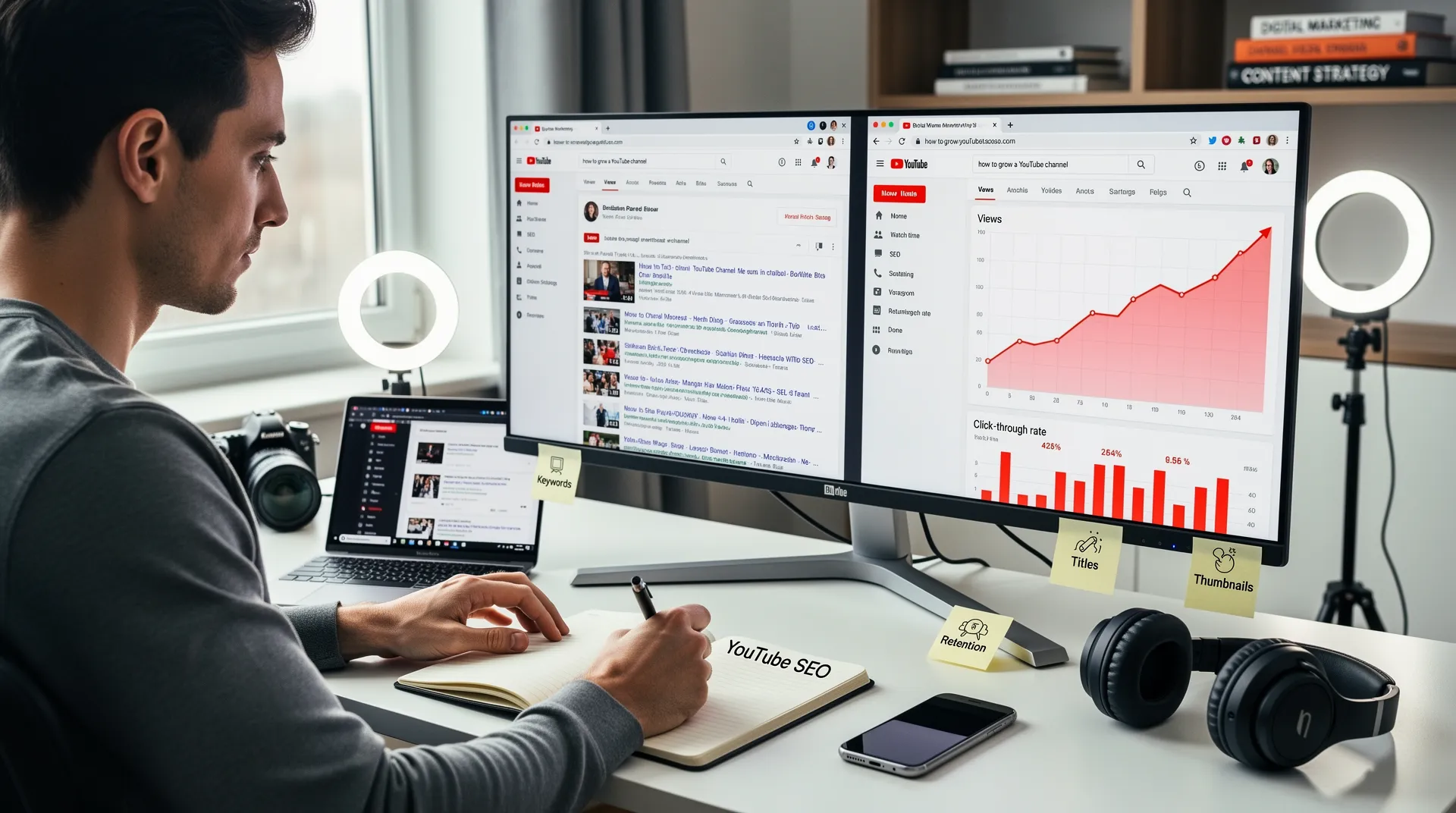
Even the best content won’t grow your channel if no one can find it. YouTube SEO (Search Engine Optimization) is the practice of optimizing your videos so they rank higher in YouTube’s search results and get recommended to the right viewers.
Keyword Research for YouTube
Start by identifying what your target audience is searching for. Use tools like TubeBuddy, VidIQ, or even YouTube’s own search bar autocomplete feature to discover popular search terms in your niche. Incorporate these keywords naturally into your video title, description, and tags.
Writing Compelling Titles and Thumbnails
Your video title and thumbnail work together to convince viewers to click. A strong title should be clear, curiosity-driven, and include your main keyword. Your thumbnail should be visually bold, use contrasting colors, and feature a clear focal point — whether that’s a human face with an expressive reaction or a striking graphic.
Video Descriptions and Tags
Write detailed video descriptions (at least 200-300 words) that include your primary and secondary keywords. Describe what the video covers, add timestamps for longer content, and include links to related videos or resources. Tags, while less impactful than they once were, still help YouTube categorize your content correctly.
Engaging Your Audience and Building a Community
YouTube success isn’t just about views — it’s about building a loyal community around your content. Engagement metrics like comments, likes, and watch time play a major role in how YouTube distributes your videos.
Respond to Comments
Make it a habit to reply to comments, especially in the early days of your channel. This signals to viewers that there’s a real person behind the content who values their input, and it encourages more people to engage. YouTube also notices high comment activity and may reward your video with increased distribution.
Use Community Posts and Shorts
In 2026, YouTube’s Community tab and YouTube Shorts are powerful tools for staying connected with your audience between uploads. Use Community posts to share behind-the-scenes content, polls, or announcements. Shorts — YouTube’s short-form vertical video format — can introduce your channel to an entirely new audience and funnel viewers to your long-form content.
Monetization: Turning Your Channel into a Revenue Stream
Once your channel gains traction, monetization becomes a real possibility. YouTube’s Partner Program requires creators to reach 1,000 subscribers and 4,000 watch hours (or 10 million Shorts views) within the past 12 months before enabling ad revenue. But ads are just the beginning.
- Sponsorships and Brand Deals: Partnering with brands relevant to your niche can be highly lucrative, often outpacing ad revenue at scale.
- Affiliate Marketing: Recommend products in your videos and earn a commission for every sale made through your unique link.
- Merchandise: Selling branded products to your loyal fans is a great way to deepen community connections while generating income.
- Channel Memberships: Offer exclusive perks to paying subscribers, such as early access to videos or members-only live streams.
Final Thoughts: Patience and Persistence Pay Off
Growing a YouTube channel in 2026 takes time, strategy, and consistent effort. Most successful creators will tell you their growth didn’t happen overnight — it came from showing up repeatedly, learning from analytics, and constantly refining their approach. Focus on delivering genuine value to your audience, optimize for discoverability, and stay patient through the early stages. With dedication and the right mindset, YouTube can become one of the most powerful platforms for building your brand or business online.

No comments yet — be the first