
Why Core Web Vitals Still Matter for SEO in 2026
Google’s Core Web Vitals have cemented their role as a fundamental pillar of modern SEO strategy. In 2026, these performance metrics are no longer optional checkboxes — they are critical ranking signals that directly influence how your website appears in search results. As the web continues to evolve and user expectations grow higher, understanding and optimizing for Core Web Vitals is one of the most impactful investments a website owner or developer can make.
Whether you’re running a small business site, an e-commerce platform, or a large content publication, your ability to deliver fast, stable, and responsive web experiences determines both your search ranking potential and your audience retention. Let’s break down what Core Web Vitals are, how they’ve evolved, and what actions you should take in 2026.
The Three Core Web Vitals Explained
Google measures page experience through three primary metrics, each targeting a different dimension of how users interact with a webpage:
1. Largest Contentful Paint (LCP)
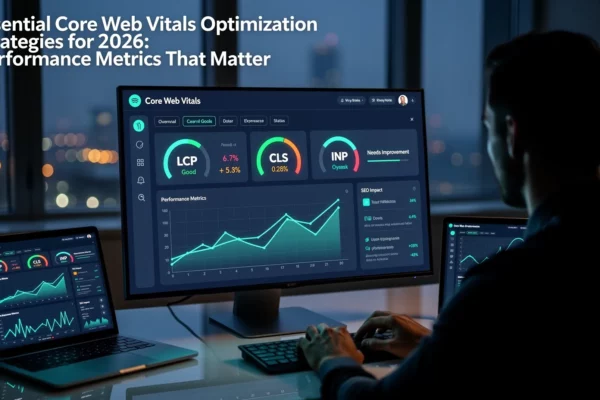
LCP measures how quickly the largest visible element on a page — typically a hero image, banner, or large block of text — loads from the user’s perspective. A good LCP score is 2.5 seconds or less. Pages that take longer than 4 seconds are considered poor performers and are likely to be penalized in rankings.
In 2026, LCP improvements are often tied to server-side rendering optimizations, next-gen image formats like AVIF and WebP, and the use of Content Delivery Networks (CDNs) to reduce latency for global audiences.
2. Interaction to Next Paint (INP)
Introduced as a replacement for First Input Delay (FID), Interaction to Next Paint (INP) evaluates the overall responsiveness of a page throughout a user’s entire visit — not just the first interaction. A good INP score is 200 milliseconds or less.
INP is particularly important for JavaScript-heavy sites and single-page applications (SPAs), where long tasks on the main thread can delay visual feedback after a user click or tap. Minimizing third-party scripts and deferring non-critical JavaScript are among the top strategies to improve INP in 2026.
3. Cumulative Layout Shift (CLS)
CLS measures visual stability — specifically, how much page elements shift unexpectedly as the page loads. A good CLS score is 0.1 or less. Common culprits include ads, embeds, and images loaded without defined dimensions.
Layout shifts frustrate users and erode trust. Reserving space for dynamic content, specifying image and video dimensions in HTML, and carefully managing font loading are essential for maintaining a stable visual experience.
How Core Web Vitals Influence Google Rankings in 2026
Google officially incorporated Core Web Vitals into its Page Experience ranking signal, and their weight in the algorithm has only grown since then. In 2026, these metrics work alongside other signals — such as mobile-friendliness, HTTPS security, and intrusive interstitial guidelines — to form a holistic picture of page quality.
It’s important to understand that Core Web Vitals are not a replacement for great content. A page with mediocre content and a perfect LCP will not outrank a page with excellent, authoritative content. However, when content quality is comparable between competing pages, Core Web Vitals can be the decisive tiebreaker.
Google uses real-world data from the Chrome User Experience Report (CrUX) to assess Core Web Vitals, meaning the scores reflect actual user experiences rather than lab simulations alone. Sites with insufficient CrUX data may fall back on lab data from tools like PageSpeed Insights.
Key Tools for Measuring Core Web Vitals in 2026
A variety of tools are available to help developers and marketers monitor and improve their Core Web Vitals scores:
- Google PageSpeed Insights: Provides both field data (from CrUX) and lab data, along with actionable recommendations for improvement.
- Google Search Console: The Core Web Vitals report groups your URLs into Good, Needs Improvement, and Poor categories, making it easy to prioritize fixes.
- Lighthouse: An open-source tool built into Chrome DevTools that audits performance, accessibility, and SEO in a controlled lab environment.
- Web Vitals Chrome Extension: Allows real-time monitoring of Core Web Vitals as you browse your own site.
- CrUX Dashboard: A free Looker Studio dashboard that visualizes your site’s Core Web Vitals trends over time using real user data.
Using a combination of these tools gives you both the big picture and the granular detail needed to diagnose and resolve performance issues effectively.
Top Strategies to Improve Core Web Vitals in 2026
Improving your Core Web Vitals requires a structured, technical approach. Here are the most effective strategies currently driving results:
Optimize Images and Media
Images are frequently the largest elements on a page and the primary driver of poor LCP scores. Compress images using modern formats like AVIF or WebP, implement lazy loading for below-the-fold images, and always define explicit width and height attributes to prevent layout shifts.
Reduce and Defer JavaScript
Excessive JavaScript execution is the leading cause of poor INP scores. Audit your scripts regularly, remove unused code, and defer or async-load third-party scripts wherever possible. Consider breaking long tasks into smaller chunks using techniques like requestIdleCallback or web workers.
Leverage Browser Caching and CDNs
Serving assets from a CDN reduces the physical distance between your server and your users, dramatically cutting load times. Pair this with aggressive browser caching policies to ensure returning visitors experience near-instant page loads.
Improve Server Response Times (TTFB)
While Time to First Byte (TTFB) is not a Core Web Vital itself, it is a foundational metric that influences LCP. Upgrading your hosting infrastructure, using server-side caching, and optimizing database queries can all reduce TTFB significantly.
Reserve Space for Ads and Embeds
Dynamically injected content like ads, social media embeds, and iframes are prime contributors to high CLS scores. Always reserve the appropriate amount of space in your layout before these elements load to prevent unexpected visual shifts.
Core Web Vitals and the Broader Page Experience Signal
In 2026, Google’s definition of a quality user experience extends beyond the three Core Web Vitals. The broader Page Experience signal also considers:
- Mobile usability: Your site must be fully functional and easy to navigate on smartphones and tablets.
- HTTPS: Secure connections are a baseline requirement for any site aiming to rank competitively.
- No intrusive interstitials: Pop-ups and overlays that obstruct content on mobile devices are penalized.
Addressing all components of the Page Experience signal — not just Core Web Vitals — ensures a well-rounded SEO foundation that holds up under algorithm updates.
The Business Case for Investing in Core Web Vitals
Beyond search rankings, the business impact of optimizing Core Web Vitals is well-documented. Studies consistently show that faster, more stable web experiences lead to higher conversion rates, lower bounce rates, and greater user satisfaction. For e-commerce sites, even a one-second improvement in page load time can translate to measurable increases in revenue.
In 2026, users are less forgiving than ever. With the proliferation of high-speed mobile networks and devices, expectations for instant-loading, seamlessly interactive websites have never been higher. Failing to meet those expectations doesn’t just hurt your rankings — it drives potential customers directly to your competitors.
Final Thoughts
Core Web Vitals are not a passing trend — they represent Google’s long-term commitment to rewarding websites that prioritize real user experience. In 2026, the sites that will dominate search results are those that combine compelling, authoritative content with technically excellent performance metrics.
Start by auditing your current Core Web Vitals scores using Google Search Console and PageSpeed Insights. Identify your weakest metrics, prioritize fixes based on potential impact, and implement changes in a structured, measurable way. The investment you make in web performance today will pay dividends in organic search visibility, user engagement, and business growth for years to come.

No comments yet — be the first