
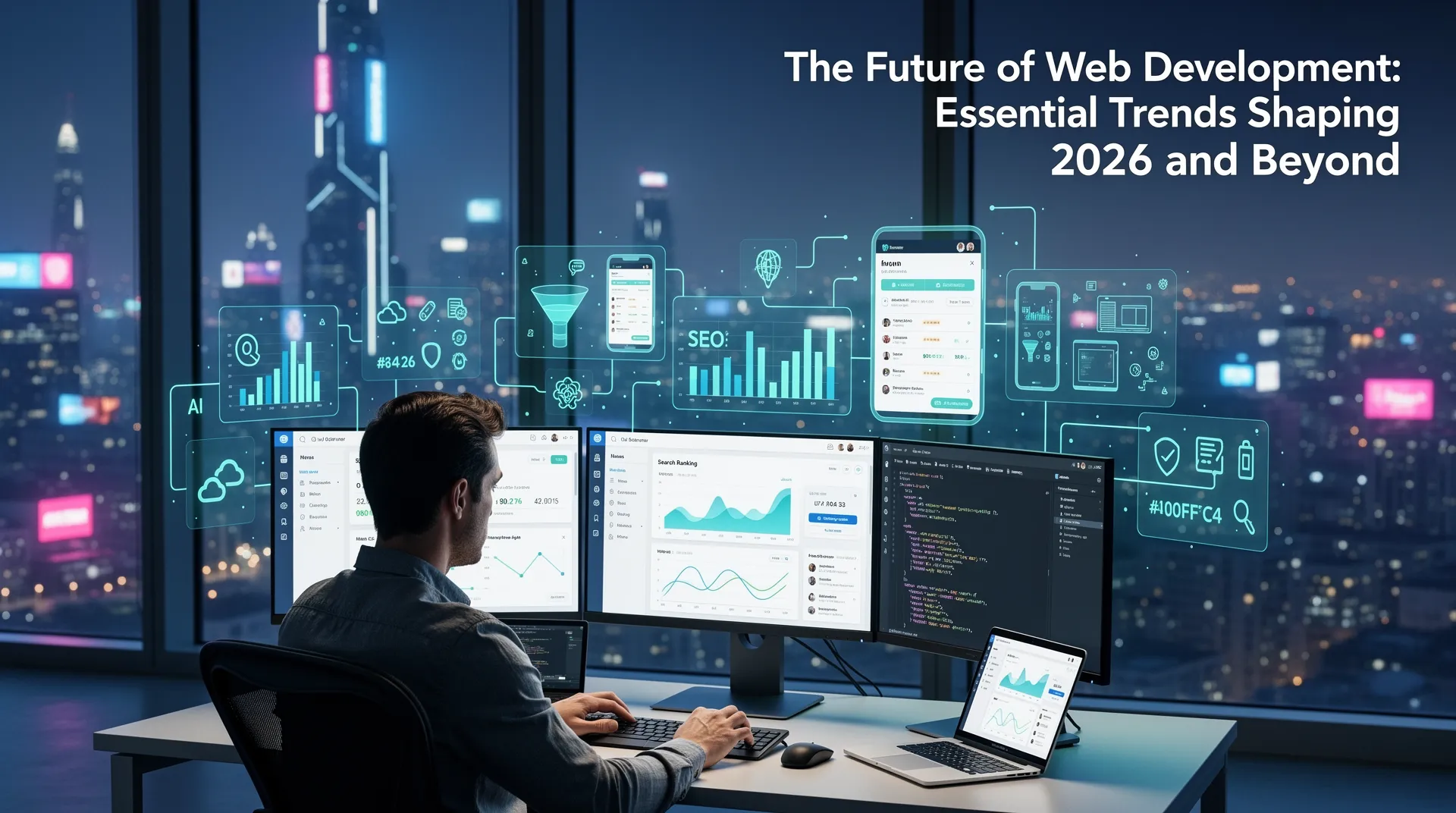
Introduction: Web Development’s Evolutionary Path
The digital landscape continues to evolve at breakneck speed, and web development stands at the forefront of this transformation. As we look toward 2026, emerging technologies and shifting user expectations are reshaping how we build and interact with web applications. Understanding these trends isn’t just beneficial—it’s essential for developers, businesses, and stakeholders who want to stay competitive in an increasingly digital world.
1. Progressive Web Applications (PWAs) Reach Maturity
Progressive Web Applications have moved beyond experimental territory into mainstream adoption. These hybrid solutions combine the accessibility of web applications with the functionality of native mobile apps. By 2026, PWAs are expected to dominate the mobile web experience, offering offline capabilities, push notifications, and app-like interfaces without requiring app store downloads.
Major companies like Twitter, Pinterest, and Starbucks have already demonstrated PWA success, achieving significant improvements in user engagement and conversion rates. The technology’s ability to work across all devices while maintaining fast loading times makes it an attractive option for businesses seeking cost-effective digital solutions.
2. Artificial Intelligence Integration Becomes Standard
AI integration in web development is transitioning from novelty to necessity. Machine learning algorithms are being embedded directly into web applications, enabling personalized user experiences, intelligent content recommendations, and automated customer support through sophisticated chatbots.
Developers are increasingly utilizing AI-powered tools for code generation, bug detection, and performance optimization. Platforms like GitHub Copilot and similar AI assistants are streamlining the development process, allowing programmers to focus on higher-level architecture and creative problem-solving.
3. WebAssembly Revolutionizes Performance
WebAssembly (WASM) is fundamentally changing what’s possible in web browsers. This binary instruction format allows developers to run code written in multiple programming languages at near-native performance levels. By 2026, WASM is expected to enable complex applications like video editing software, CAD programs, and high-performance games to run seamlessly in web browsers.
The technology is particularly valuable for porting existing desktop applications to the web without sacrificing performance, opening new possibilities for cloud-based software delivery.
4. Serverless Architecture Gains Widespread Adoption
Serverless computing is reshaping backend development by eliminating infrastructure management concerns. Developers can focus entirely on writing business logic while cloud providers handle scaling, maintenance, and deployment automatically.
Functions-as-a-Service (FaaS) platforms like AWS Lambda, Azure Functions, and Google Cloud Functions are becoming the default choice for many new projects. This approach reduces operational costs, improves scalability, and accelerates time-to-market for web applications.
5. Enhanced Security Measures Become Non-Negotiable
With cyber threats becoming more sophisticated, web security is evolving beyond basic SSL certificates and password protection. Zero-trust architecture, advanced encryption methods, and biometric authentication are becoming standard implementations.
Content Security Policy (CSP) headers, Subresource Integrity (SRI), and other security-first development practices are being integrated into the development workflow from project inception rather than as afterthoughts.
6. Voice User Interface Integration Expands

Voice technology is extending beyond smart speakers into web applications. Voice search optimization, voice-controlled navigation, and speech-to-text functionality are becoming integral components of modern web experiences.
Developers are incorporating Web Speech API and other voice recognition technologies to create more accessible and intuitive user interfaces, particularly benefiting users with disabilities or those using hands-free devices.
7. Micro-Frontend Architecture Streamlines Development
Large-scale web applications are increasingly adopting micro-frontend architecture, allowing different teams to work on separate application components independently. This approach mirrors the microservices pattern but applies to frontend development.
Each micro-frontend can be developed, tested, and deployed separately using different frameworks or technologies, providing greater flexibility and reducing the complexity of large application maintenance.
8. Advanced CSS Features Transform Design Possibilities
CSS continues to evolve with powerful new features that reduce dependence on JavaScript for complex layouts and animations. CSS Grid, Flexbox, and emerging properties like Container Queries are enabling more sophisticated responsive designs.
CSS-in-JS solutions and utility-first frameworks like Tailwind CSS are gaining popularity, offering developers more efficient ways to manage styling in component-based architectures.
9. Edge Computing Optimizes Performance
Edge computing is bringing data processing closer to users, significantly reducing latency and improving application performance. Content Delivery Networks (CDNs) are evolving into edge computing platforms that can execute code at edge locations.
This trend is particularly important for real-time applications, IoT integrations, and applications serving global audiences where network latency can significantly impact user experience.
10. Sustainable Web Development Practices Gain Priority
Environmental consciousness is influencing web development practices. Developers are focusing on creating energy-efficient websites that consume less bandwidth and processing power. Green hosting solutions, optimized code, and sustainable design principles are becoming key considerations in project planning.
Performance optimization techniques that reduce server load and energy consumption are being prioritized not just for user experience but for environmental impact.
Conclusion: Preparing for the Future
The web development landscape of 2026 promises to be more dynamic, efficient, and user-centric than ever before. These trends represent not just technological advances but fundamental shifts in how we approach digital experiences.
Success in this evolving environment requires continuous learning, adaptability, and a willingness to embrace new technologies while maintaining focus on core principles of good web development: performance, accessibility, security, and user experience. Developers and organizations that proactively adopt these trends will be best positioned to create compelling digital experiences that meet future user expectations.


No comments yet — be the first