

What’s Driving Digital Marketing in 2026?
The digital marketing landscape in 2026 is evolving faster than ever before. Businesses that want to stay competitive must understand the key shifts in consumer behavior, technology adoption, and advertising strategy. From AI-powered personalization to the rise of immersive content formats, the trends defining this year are reshaping how brands connect with their audiences online — and how they monetize those connections through platforms like Google AdSense and beyond.
AI Is Now Central to Every Marketing Decision
Artificial intelligence has moved well beyond being a buzzword. In 2026, AI is deeply embedded in the day-to-day operations of digital marketers, from content creation and audience segmentation to bid management and performance prediction. Marketers who leverage AI tools are seeing significant improvements in campaign efficiency and return on ad spend (ROAS).
AI-driven automation is particularly impactful for publishers using AdSense, as smart pricing algorithms and contextual targeting have become more sophisticated. The result is higher-quality ad placements and improved revenue for content creators who align their strategies with AI-recommended optimizations.
Generative AI and Content Creation
Generative AI tools are now enabling marketers to produce high-quality, personalized content at scale. From dynamic ad copy to personalized landing pages, brands are using generative AI to tailor messaging for micro-segments of their audience. This not only improves engagement rates but also increases the relevance of ads served through programmatic platforms.
The Search Experience Is Transforming
Search behavior in 2026 looks very different from just a few years ago. The rise of AI-powered search experiences — including conversational search and AI overviews — has changed how users discover content and how businesses need to optimize their digital presence.
Traditional keyword-based SEO is giving way to a more intent-driven, semantic approach. Brands that understand the deeper “why” behind a search query are better positioned to appear in AI-curated results. For AdSense publishers, this means that content quality and topical authority have never been more important for attracting high-value ad traffic.
Voice and Visual Search Are Gaining Ground
Voice search and visual search are no longer niche behaviors. A growing segment of consumers — especially younger demographics — now initiate searches through voice commands or by uploading images. Businesses need to optimize their content for these modalities to capture traffic that traditional text-based strategies might miss.
Video Content Continues to Dominate
Video remains the most consumed content format in 2026. Short-form video, popularized by platforms like YouTube Shorts, continues to attract massive audiences, while long-form educational and entertainment content retains its value for depth and engagement. For advertisers and AdSense publishers alike, video is a critical component of any monetization strategy.
Connected TV and Streaming Ads
Connected TV (CTV) advertising has become a mainstream channel for digital marketers. As more households cut the cord and move to streaming services, brands are investing heavily in CTV ad formats. These environments offer premium inventory with highly engaged audiences — a significant opportunity for both direct advertisers and programmatic ad networks.
First-Party Data Is the New Currency
With continued pressure on third-party cookies and growing consumer privacy awareness, first-party data has become the most valuable asset a marketer can hold. Businesses that have invested in building robust first-party data ecosystems — through loyalty programs, newsletters, gated content, and customer accounts — are now reaping the benefits.
For AdSense publishers, understanding your audience through first-party signals allows for more relevant ad targeting, which in turn drives higher CPMs and better advertiser satisfaction. Google’s own tools, including Google Analytics 4 and the Google Ads Data Hub, are designed to help publishers make the most of their first-party data while respecting user privacy.
Privacy-First Marketing Is Non-Negotiable
Privacy regulations continue to tighten globally. From GDPR in Europe to state-level laws in the United States, marketers must navigate a complex patchwork of compliance requirements. In 2026, the brands that have built privacy into their marketing DNA — rather than treating it as an afterthought — are the ones earning consumer trust and long-term loyalty.
Personalization at Scale
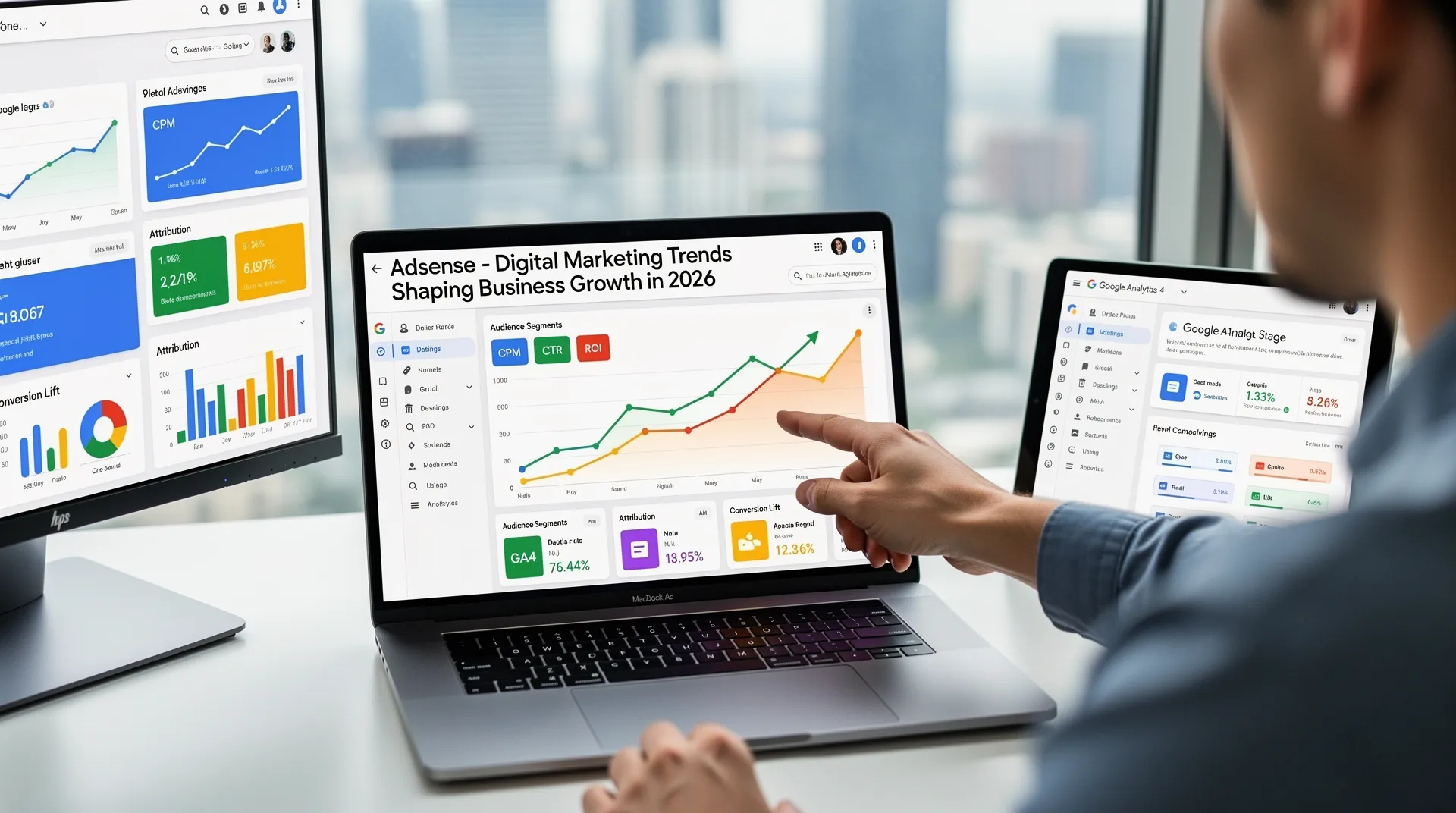
Today’s consumers expect personalized experiences at every touchpoint. Whether they’re browsing a website, watching a YouTube ad, or receiving a promotional email, they want content that speaks directly to their needs and interests. Achieving this at scale requires a combination of rich data, intelligent automation, and creative flexibility.
- Dynamic creative optimization (DCO): Automatically assembles the most relevant ad creative for each individual viewer based on real-time data signals.
- Audience segmentation: Divides your customer base into detailed micro-segments to deliver hyper-targeted messaging.
- Behavioral retargeting: Re-engages users who have previously interacted with your brand, using personalized follow-up ads.
- Predictive analytics: Uses historical data and machine learning to anticipate future customer behavior and preferences.
Omnichannel Marketing Is the Standard
Consumers in 2026 interact with brands across a wide array of channels and devices. A seamless, consistent experience across mobile, desktop, social media, email, and in-store touchpoints is no longer a competitive advantage — it’s the baseline expectation. Marketers must break down internal silos and unify their data, messaging, and creative strategies across all channels.
For AdSense and programmatic advertising, this means ensuring that your website and app experiences are optimized across all screen sizes and platforms. Mobile-first design, fast page load times, and intuitive navigation are all critical factors that influence both user engagement and ad performance.
Sustainability and Brand Values Matter More Than Ever
Consumers, particularly millennials and Gen Z, are making purchasing decisions based on a brand’s values and environmental commitments. In 2026, brands that authentically communicate their sustainability initiatives and social responsibility efforts are seeing stronger consumer affinity and higher engagement rates. This trend also influences which brands advertisers want to associate with — meaning that publishers who align their content with positive brand values can attract higher-quality advertising partners.
Key Takeaways for Marketers and AdSense Publishers in 2026
- Embrace AI and automation tools to enhance campaign performance and content relevance.
- Invest in first-party data collection and privacy-compliant marketing practices.
- Optimize content for evolving search behaviors, including voice, visual, and AI-powered search.
- Prioritize video content and explore CTV advertising opportunities.
- Build a true omnichannel presence with consistent messaging and seamless user experiences.
- Align your brand values with what matters to your target audience to build long-term trust.
Conclusion
2026 is a pivotal year for digital marketing. The brands and publishers that will thrive are those willing to embrace technological change, put the consumer at the center of every decision, and build sustainable, data-driven strategies. For AdSense publishers in particular, focusing on content quality, audience understanding, and platform optimization will be the keys to unlocking stronger monetization and long-term growth in an increasingly competitive digital ecosystem.

No comments yet — be the first