
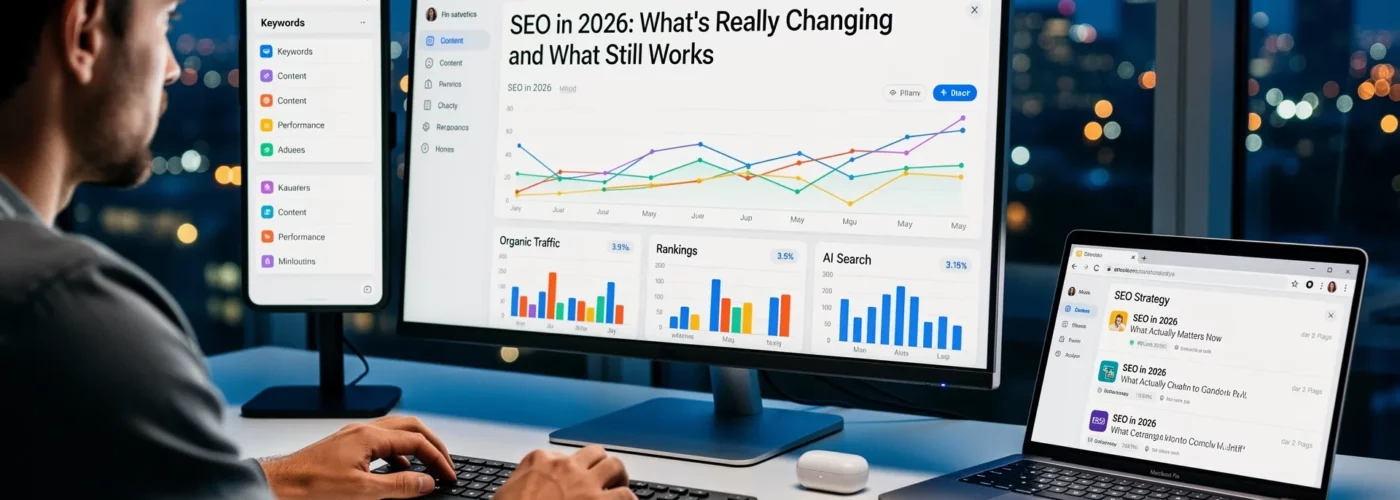
SEO in 2026: What’s Really Changing and What Actually Matters
SEO in 2026 looks very different from what it was just a few years ago. Search engines are smarter, user behavior has shifted, and AI has fundamentally changed how content is created and consumed. Yet some core principles remain as relevant as ever. If you’re trying to figure out where to focus your energy this year, this guide breaks down what’s genuinely changing — and what still deserves your attention.
The Biggest Shifts Happening in SEO Right Now
AI Overviews Are Eating Click-Through Rates
Google’s AI Overviews (formerly Search Generative Experience) have now rolled out broadly, and the impact on organic click-through rates is undeniable. For informational queries especially, users are getting direct answers on the search results page without ever clicking through to a website. Studies tracking post-rollout traffic trends show significant drops for top-of-funnel content in many niches.
This doesn’t mean SEO is dead — far from it. But it does mean your strategy needs to evolve. Sites that are being cited inside AI Overviews are actually seeing brand visibility gains even without clicks. The new goal isn’t just ranking #1; it’s becoming a trusted source that AI systems reference.
Zero-Click Searches Are the New Normal
Zero-click searches aren’t new, but in 2026 they dominate. Featured snippets, knowledge panels, People Also Ask boxes, and now AI-generated answers mean that a huge portion of searches are resolved entirely on the SERP. Adapting your content strategy to account for this reality isn’t optional anymore — it’s survival.
The smartest brands are shifting their focus toward mid-funnel and bottom-funnel keywords where user intent is stronger and the likelihood of a click is higher. If someone is searching for a specific product, service comparison, or local business, they still need to click. That’s where the opportunity lies.
E-E-A-T Is More Important Than Ever
Google’s quality rater guidelines have long emphasized Expertise, Authoritativeness, and Trustworthiness (E-A-T). In 2026, the extra “E” for Experience is being enforced more aggressively through algorithmic signals. Content that demonstrates real, first-hand experience — product reviews written by actual users, medical advice from verified practitioners, financial guidance from credentialed experts — is outperforming generic AI-generated content across the board.
This is one area where human input remains irreplaceable. Showcasing author credentials, citing original research, and building a verifiable track record online are now foundational technical SEO tasks, not nice-to-haves.
What’s Changed in Technical SEO Specifically
Core Web Vitals: The Bar Keeps Rising
Google continues to update its Core Web Vitals benchmarks, and in 2026 Interaction to Next Paint (INP) has fully replaced First Input Delay (FID) as an official ranking signal. Sites that haven’t optimized for INP are starting to feel the pressure. INP measures how responsive a page is to user interactions — clicks, taps, keyboard inputs — across the full lifecycle of a page visit, not just the initial load.
Getting INP scores into the “Good” range (under 200ms) requires a deeper technical audit than many teams have conducted. Long JavaScript tasks, third-party scripts, and inefficient event handlers are common culprits. If you haven’t run an INP audit recently, that should be a priority.
Crawl Budget Optimization Is Back on the Agenda
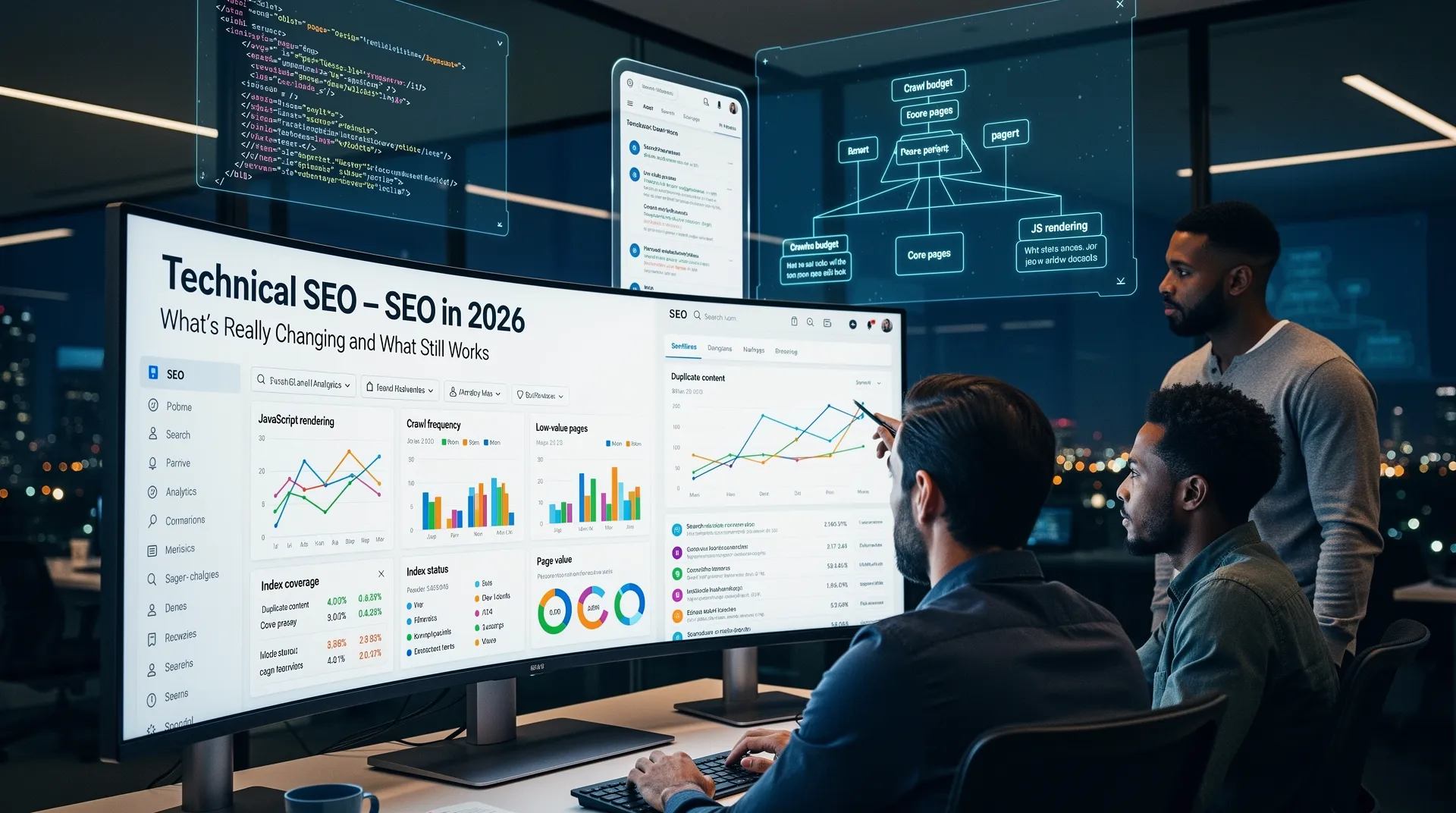
As websites grow more complex — with faceted navigation, parameter-heavy URLs, and large JavaScript-rendered applications — crawl budget has become a pressing concern again. Google’s crawlers are sophisticated, but they’re not unlimited. Wasting crawl budget on duplicate content, low-value pages, or improperly rendered JavaScript means your most important pages may not be crawled and indexed as frequently as they should be.
In 2026, technical SEO teams are paying close attention to log file analysis, robots.txt configurations, and internal linking architecture to ensure that crawl equity flows to the pages that matter most.
Structured Data and Schema Markup Are More Powerful
Schema markup has gone from a bonus to a baseline requirement for competitive SEO. Rich results — including review stars, FAQs, how-to steps, product availability, and event listings — are prominently displayed in SERPs and drive meaningful CTR improvements. More importantly, structured data is believed to help AI systems better understand and cite your content.
Beyond standard schema types, many SEOs are now experimenting with more granular markup to help search engines and AI models interpret the context of their content more accurately.
What Still Works (And Always Will)
Quality Content Remains the Foundation
Despite all the algorithmic changes, the fundamentals haven’t gone anywhere. Content that genuinely helps users, answers their questions thoroughly, and is written with real expertise continues to perform. The difference in 2026 is that the bar for “quality” has risen dramatically. Thin content, keyword stuffing, and generic blog posts optimized purely for search bots no longer cut it.
The content that wins today is original, specific, and useful. It covers topics with depth, incorporates unique data or perspectives, and is formatted for both human readers and search engine crawlers.
Backlinks Still Matter — But Quality Over Quantity
Link building hasn’t lost its importance, but the nature of what counts as a valuable link has changed. A handful of high-authority, topically relevant backlinks will outperform hundreds of low-quality directory links every time. In 2026, digital PR, original research, and building genuine industry relationships are the most effective link-building strategies.
User Experience Is an SEO Signal
Google has become increasingly sophisticated at measuring how users interact with search results and websites. High bounce rates, short dwell times, and low engagement send negative signals. Investing in UX — faster page loads, clear navigation, mobile-first design, and accessible content — pays dividends in both rankings and conversions.
Key Takeaways for SEO in 2026
- Adapt to AI Overviews by becoming a citable, authoritative source rather than just chasing click traffic.
- Focus on mid- and bottom-funnel keywords where user intent is commercial and clicks are more likely.
- Invest in E-E-A-T signals — demonstrate real expertise, verified authorship, and first-hand experience.
- Audit for INP as it is now an official Core Web Vitals ranking factor.
- Implement comprehensive schema markup to improve rich result eligibility and AI citation potential.
- Optimize crawl budget through log file analysis, clean URL structures, and smart internal linking.
- Build quality backlinks through digital PR and original data, not volume-based tactics.
Final Thoughts
SEO in 2026 rewards those who think holistically — combining technical excellence, genuine content quality, and an understanding of how AI is reshaping the search experience. The tactics that worked in isolation a few years ago are no longer enough. Success now requires an integrated approach where technical SEO, content strategy, and brand authority work together.
The good news? The core mission of SEO hasn’t changed: understand what your audience is looking for and make it as easy as possible for them — and for search engines — to find it. The tools and signals evolve, but that principle endures.
No comments yet — be the first