

The Evolution of CSS in Modern Web Development
Cascading Style Sheets continue to evolve at an unprecedented pace, bringing forth innovative features that are revolutionizing how developers approach web design and user experience. As we navigate through 2026, the CSS landscape has transformed dramatically, offering powerful new tools that enhance both developer productivity and end-user satisfaction.
The modern web demands more sophisticated styling capabilities, and CSS has risen to meet these challenges with remarkable innovations that push the boundaries of what’s possible in web development.
Container Queries: The Game-Changer for Responsive Design
Container queries represent one of the most significant breakthroughs in responsive web design methodology. Unlike traditional media queries that respond to viewport dimensions, container queries enable elements to adapt based on their parent container’s size, creating truly modular and flexible components.
This revolutionary approach allows developers to create components that intelligently adjust their layout regardless of where they’re placed within a webpage. Whether a component appears in a narrow sidebar or spans the full width of a page, it can now respond appropriately to its immediate context.
- Enhanced component reusability across different layouts
- More intuitive responsive behavior for complex designs
- Reduced dependency on global breakpoints
- Improved maintainability of large-scale projects
CSS Subgrid: Perfecting Grid Alignment
The introduction of CSS Subgrid has addressed one of the most persistent challenges in grid-based layouts: achieving perfect alignment across nested grid structures. This feature enables child elements to inherit and participate in their parent’s grid system seamlessly.
Developers can now create sophisticated multi-level layouts where content naturally aligns across different sections, eliminating the need for complex workarounds and ensuring consistent visual harmony throughout the design.
Practical Applications of Subgrid
Subgrid excels in scenarios involving card layouts, form designs, and content-heavy interfaces where maintaining visual consistency across varying content lengths is crucial. It provides the flexibility to create dynamic layouts that adapt beautifully to different content scenarios.
CSS Nesting: Streamlined Stylesheet Organization
Native CSS nesting has finally arrived, bringing the beloved feature from preprocessors directly into standard CSS. This enhancement significantly improves code organization and reduces redundancy in stylesheet authoring.
Developers can now write more intuitive and maintainable CSS by nesting selectors within their parent elements, creating a clear hierarchical structure that mirrors the HTML document tree. This approach reduces repetition and makes stylesheets more readable and easier to navigate.
Advanced Color Management with CSS Color Module
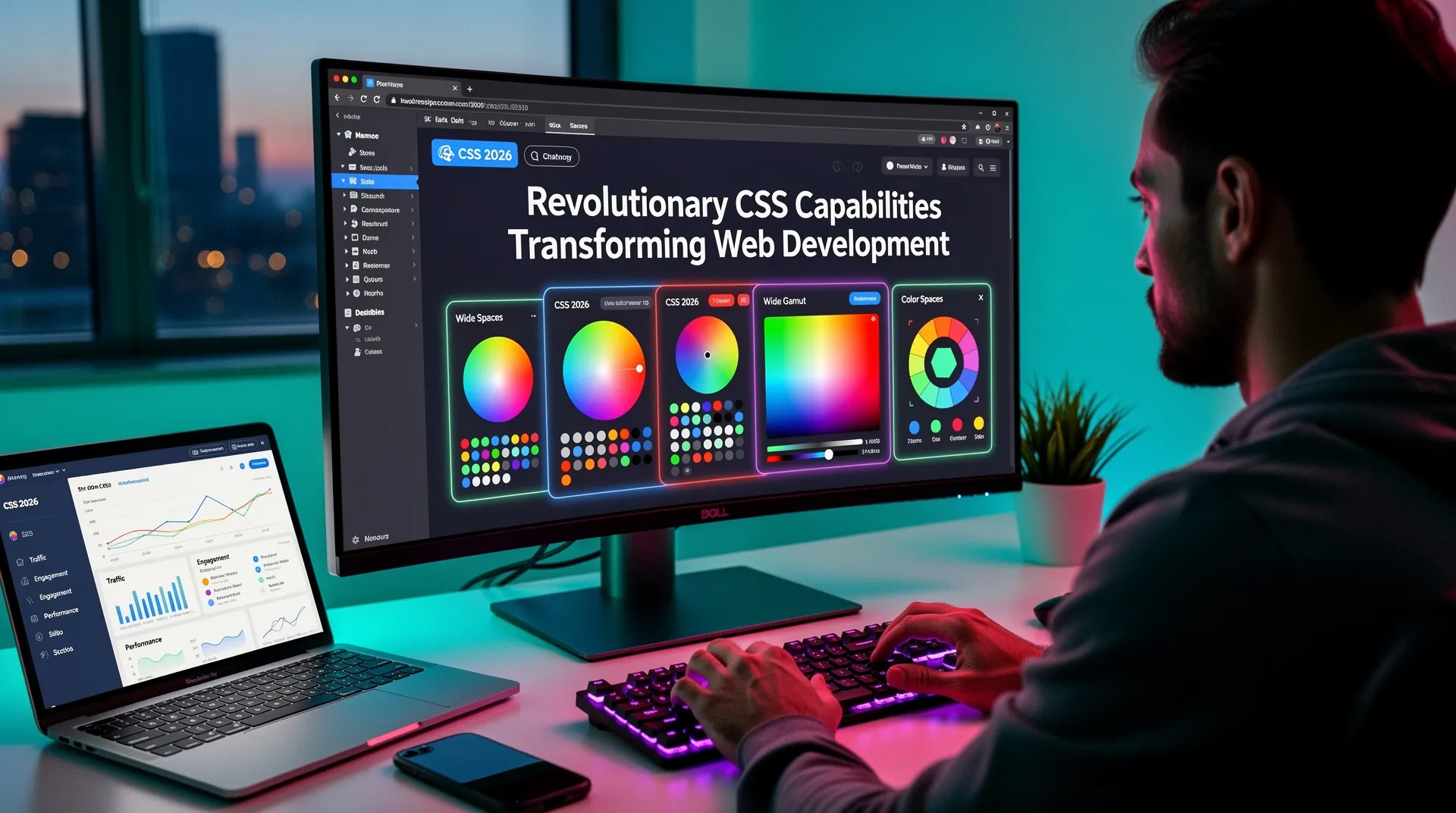
The expanded CSS Color Module introduces sophisticated color manipulation capabilities, including support for wider color gamuts and enhanced color space functionality. These improvements enable more precise color control and better visual consistency across different devices and display technologies.
New Color Functions and Spaces
Modern CSS now supports advanced color functions that allow for dynamic color manipulation, including improved contrast calculations, color mixing capabilities, and support for high-dynamic-range displays. These features enable developers to create more accessible and visually appealing interfaces.
- Enhanced color contrast calculations for accessibility
- Dynamic color mixing and manipulation
- Support for P3 and other wide color gamuts
- Improved color consistency across devices
CSS Cascade Layers: Managing Style Priority
Cascade Layers introduce a systematic approach to managing CSS specificity and style inheritance. This feature provides developers with explicit control over how different stylesheets and style rules interact, reducing conflicts and making large codebases more manageable.
By organizing styles into distinct layers, teams can establish clear hierarchies for different types of styles, such as reset styles, component styles, and utility classes, ensuring predictable styling outcomes.
Performance and Animation Enhancements
Recent CSS developments include significant improvements to animation performance and capabilities. New animation features provide smoother transitions, better performance optimization, and more creative possibilities for interactive elements.
Advanced Animation Controls
Modern CSS animations offer enhanced control over timing, easing, and complex motion paths, enabling developers to create more engaging and performant user interfaces without relying heavily on JavaScript-based animation libraries.
Browser Support and Implementation Strategy
As these cutting-edge CSS features gain broader browser support throughout 2026, developers are adopting progressive enhancement strategies to implement them effectively. This approach ensures that newer capabilities enhance the user experience while maintaining compatibility with a wide range of browsers and devices.
The key to successful implementation lies in understanding feature detection, providing appropriate fallbacks, and gradually introducing these advanced capabilities as browser support continues to expand across the ecosystem.
Future-Proofing Your CSS Development Approach
Embracing these modern CSS capabilities requires a strategic approach that balances innovation with practical implementation considerations. Developers should focus on understanding the fundamental concepts behind these features and how they can be integrated into existing workflows and design systems.
The evolution of CSS continues to accelerate, with each new feature building upon previous innovations to create a more powerful and expressive styling language that meets the demands of contemporary web development.

No comments yet — be the first