

The Evolution of Google Ads: What’s Changing in 2025
Google Ads continues to transform the digital advertising landscape with significant updates that reshape how advertisers reach their target audiences. As we progress through 2025, understanding these changes becomes crucial for maintaining competitive advantage and maximizing return on ad spend.
The platform’s evolution reflects broader shifts in consumer behavior, privacy regulations, and technological advancement. Advertisers who adapt quickly to these modifications will find themselves better positioned to capitalize on new opportunities while those who lag behind may struggle with declining performance.
Performance Max Campaigns: Enhanced Automation and Control
Performance Max campaigns have received substantial improvements, offering advertisers more granular control while maintaining the benefits of automated optimization. The updated system now provides enhanced asset reporting, allowing marketers to identify which creative elements drive the strongest performance across different channels.
New audience insights within Performance Max enable advertisers to understand customer segments more effectively. These insights help refine targeting strategies and improve campaign relevance, leading to higher conversion rates and better overall performance.
The integration of additional conversion tracking capabilities means advertisers can now measure success across a broader range of actions, from micro-conversions to complex multi-touch customer journeys.
Privacy-First Advertising: Adapting to Cookie Deprecation
Google’s approach to privacy-centric advertising has accelerated with new solutions designed to maintain effective targeting without relying on third-party cookies. The Topics API implementation provides advertisers with interest-based targeting options that respect user privacy while delivering relevant advertisements.
First-party data has become increasingly valuable, and Google Ads now offers enhanced tools for importing and utilizing this information. Customer Match capabilities have expanded, allowing for more sophisticated audience creation and remarketing strategies.
Conversion modeling improvements help fill data gaps caused by privacy restrictions, ensuring advertisers can still make informed decisions about campaign optimization and budget allocation.
AI-Powered Creative Optimization
Artificial intelligence integration has reached new heights within Google Ads creative tools. Automated asset generation can now produce compelling ad copy and visual elements based on landing page content and campaign objectives.
Smart bidding algorithms have become more sophisticated, incorporating real-time signals to adjust bids with greater precision. This advancement leads to improved cost-per-acquisition metrics and better overall campaign efficiency.
The introduction of AI-driven creative testing allows advertisers to experiment with multiple variations simultaneously, identifying winning combinations faster than traditional A/B testing methods.
Enhanced Shopping Campaign Features
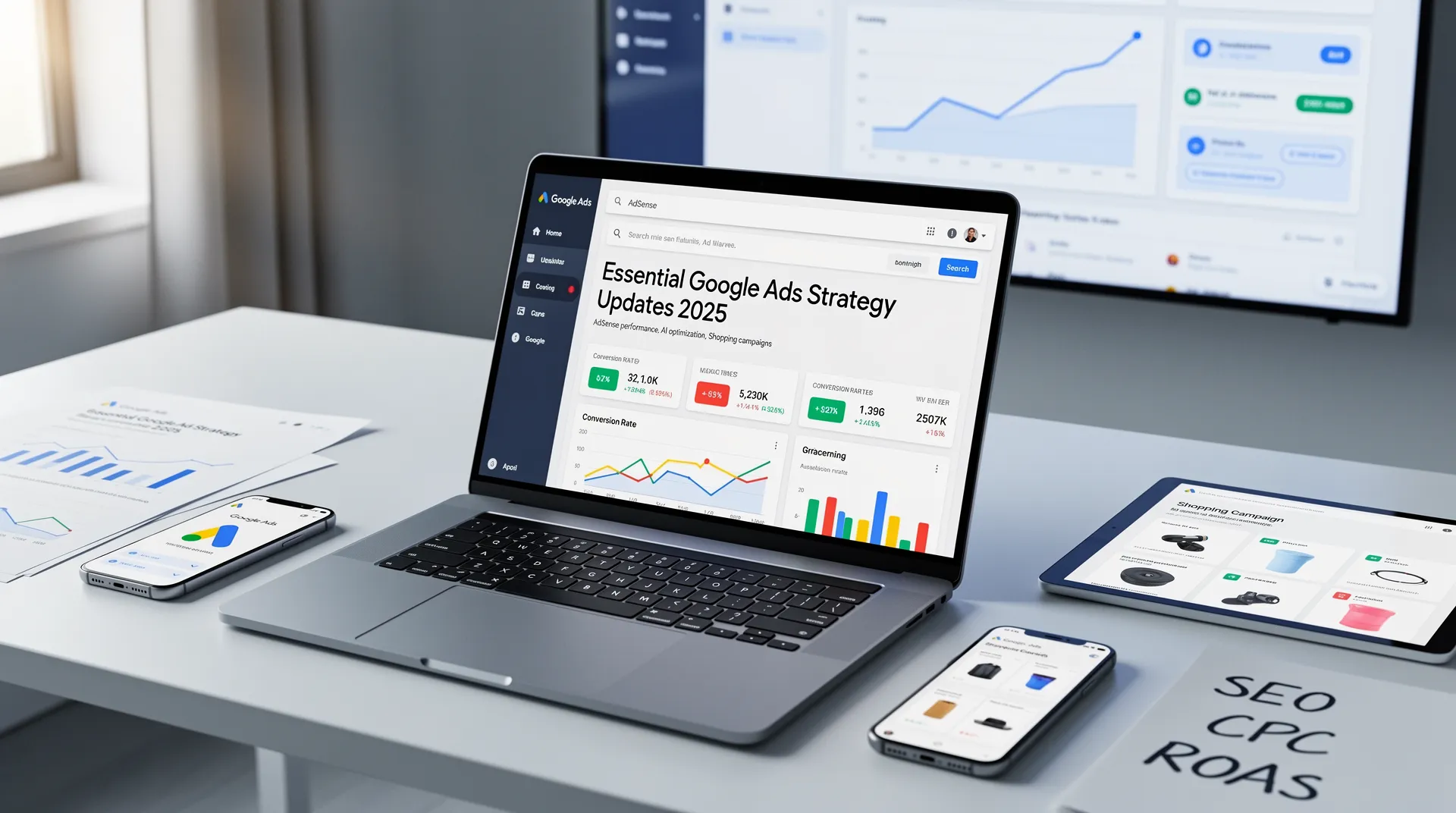
E-commerce advertisers benefit from expanded Shopping campaign functionality, including improved product feed management and dynamic remarketing capabilities. Local inventory ads have gained new features that help bridge online and offline shopping experiences.
Product Studio integration enables retailers to create high-quality images and videos directly within the Google Ads interface, reducing the need for external creative resources and streamlining campaign setup processes.
Shopping campaigns now support more detailed product attributes, allowing for better matching between search queries and product listings, resulting in higher-quality traffic and improved conversion rates.
Measurement and Attribution Updates
Google Analytics 4 integration with Google Ads has deepened, providing more comprehensive cross-platform reporting and attribution modeling. Enhanced conversion tracking capabilities help advertisers understand the complete customer journey across devices and touchpoints.
Data-driven attribution has become the default model for new campaigns, offering more accurate insights into which marketing channels and touchpoints contribute most effectively to conversions.
Offline conversion tracking improvements enable businesses with longer sales cycles or in-store transactions to better measure the impact of their digital advertising efforts.
Video Advertising Innovation
YouTube advertising within Google Ads has expanded with new format options and targeting capabilities. Shorts ads have gained prominence as vertical video content continues to grow in popularity among consumers.
Video action campaigns now offer more customization options, allowing advertisers to create compelling calls-to-action that drive specific business outcomes while maintaining the engaging nature of video content.
Audience targeting for video campaigns has become more refined, with options to reach viewers based on their viewing history, interests, and likelihood to take desired actions.
Best Practices for Implementing These Updates
Successful adaptation to these Google Ads updates requires a strategic approach. Start by auditing current campaigns to identify areas where new features could improve performance or efficiency.
Invest time in understanding AI-powered tools and automation features, as these technologies can significantly reduce manual workload while improving results when properly configured.
Focus on first-party data collection and management, as this information becomes increasingly valuable for targeting and measurement in the privacy-focused advertising environment.
Regular testing and optimization remain crucial, but leverage new AI-driven testing capabilities to accelerate learning and improve creative performance more quickly than traditional methods allow.


No comments yet — be the first