
Start Your AdSense Journey the Right Way in 2026
If you’re new to blogging and want to turn your content into a steady income stream, Google AdSense remains one of the most accessible and rewarding monetization platforms available. In 2026, the competition is fiercer than ever — but so are the opportunities. With the right strategy, even beginners can build a blog that generates meaningful passive income through AdSense.
This guide breaks down the most powerful AdSense blog tips for beginners, covering everything from niche selection to ad placement optimization, so you can start earning faster and smarter.
Choose a High-Paying Niche from the Start
One of the biggest mistakes new bloggers make is choosing a niche they love without considering its earning potential. While passion matters, your niche directly influences your AdSense CPC (Cost Per Click) rates. Some niches attract advertisers who pay significantly more per click than others.
In 2026, the highest-paying AdSense niches include:
- Finance and investing – loans, insurance, and cryptocurrency topics command premium CPCs
- Health and wellness – medical advice, supplements, and fitness content
- Legal services – attorneys, personal injury, and legal guides
- Technology and software – SaaS tools, cybersecurity, and AI-related content
- Real estate – property buying guides, mortgage tips, and housing market insights
Choosing a niche in one of these categories gives your blog an immediate advantage in earning potential, even with modest traffic levels.
Build a Blog That Google Actually Trusts
Before you can earn through AdSense, you need to get approved — and before approval, you need a blog that Google considers credible and worthy of displaying ads. In 2026, Google’s approval standards have become increasingly strict, focusing heavily on content quality, website structure, and user experience.
Key Elements of an AdSense-Ready Blog
- Original, high-quality content: Publish at least 15–20 well-researched articles before applying. Thin or duplicate content will result in rejection.
- Essential pages: Make sure your blog has an About page, Contact page, and Privacy Policy. These signal legitimacy to Google.
- Clean, fast design: Use a professional theme that loads quickly on both mobile and desktop. Page speed directly impacts user experience and approval chances.
- Clear navigation: Visitors and Google bots should be able to browse your blog intuitively.
- Custom domain: A paid domain (e.g., yourblog.com) is far more likely to be approved than a free subdomain.
Write Content That Attracts Organic Traffic
AdSense earnings are a direct function of your traffic. More targeted visitors = more ad impressions = more potential clicks. The most sustainable way to grow your traffic in 2026 is through SEO — search engine optimization.
SEO Strategies That Work for AdSense Blogs
Focus on long-tail keywords — specific search phrases that have lower competition but clear user intent. For example, instead of targeting “personal finance,” target “best budgeting apps for college students 2026.” These keywords convert better and are easier to rank for when you’re starting out.
Use tools like Google Search Console, Ubersuggest, or Ahrefs to find keywords with decent monthly search volumes and manageable competition. Build your content calendar around these opportunities.
Additionally, internal linking between your blog posts helps Google understand your site’s structure and keeps readers engaged longer — both of which contribute to better rankings and higher ad revenue.
Optimize Your Ad Placement for Maximum Revenue
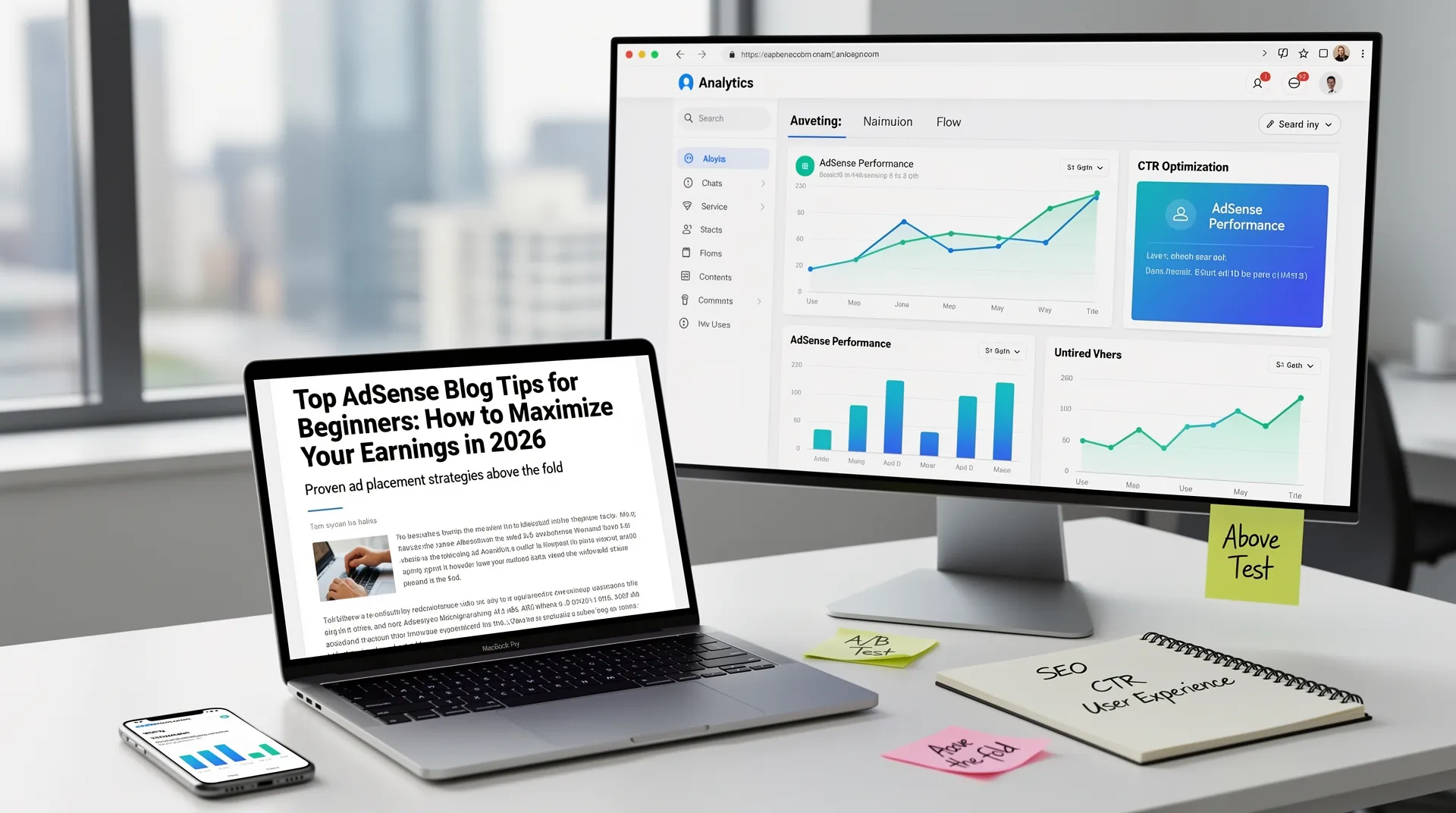
Where you place ads on your blog matters just as much as how much traffic you receive. Strategic ad placement can dramatically increase your CTR (Click-Through Rate) without compromising the user experience — which is a balance Google increasingly watches in 2026.
Proven Ad Placement Strategies
- Above the fold: Place an ad unit in the header or just below your top navigation. Readers see this immediately upon landing on your page.
- Within content: Inserting ads after the first or second paragraph tends to generate high engagement, as readers are already invested in the content.
- End of article: Readers who finish an article are highly engaged — an ad at the bottom captures their attention before they leave.
- Sidebar ads: While less effective on mobile, sidebar placements still perform well on desktop for certain niches.
Avoid cluttering your blog with too many ads. Google’s Better Ads Standards penalize sites with intrusive ad experiences, and excessive ads can drive readers away, reducing your long-term revenue potential.
Use Auto Ads and Responsive Ad Units
Google’s Auto Ads feature uses machine learning to automatically identify the best placements for ads on your pages. For beginners in 2026, this is an excellent starting point because it removes the guesswork from manual placement while still delivering competitive results.
Pair Auto Ads with responsive ad units — these automatically adjust their size to fit the screen they’re displayed on. Since mobile traffic now accounts for the majority of web browsing globally, responsive ads ensure you’re monetizing every visitor effectively regardless of their device.
Monitor Performance and Continuously Improve
Successful AdSense bloggers don’t just set it and forget it. They regularly review their performance data and make data-driven adjustments. In your AdSense dashboard, pay close attention to:
- RPM (Revenue Per Mille): How much you earn per 1,000 page views — a key indicator of overall monetization efficiency.
- CTR (Click-Through Rate): The percentage of ad impressions that result in clicks. A very high CTR can trigger invalid click reviews, while a very low one signals poor placement.
- CPC (Cost Per Click): The average revenue per ad click. Improving your niche or keyword targeting can raise this figure significantly.
- Top-performing pages: Identify which blog posts generate the most AdSense revenue and create more content in the same style or topic area.
Be Patient and Stay Consistent
One of the most important — and often overlooked — AdSense tips for beginners is simply this: be patient. Most successful AdSense bloggers didn’t see significant earnings in their first month. Revenue grows alongside your traffic, domain authority, and content library.
In 2026, a realistic timeline for a new blogger to start seeing meaningful AdSense income is 6 to 12 months of consistent effort. That means publishing new articles regularly, building backlinks, optimizing existing content, and staying up to date with Google’s algorithm changes.
Set a publishing schedule you can maintain — whether that’s two posts per week or four — and stick to it. Consistency signals to Google that your site is active and authoritative, which accelerates your ranking trajectory over time.
Final Thoughts: Your AdSense Success Blueprint for 2026
Building a profitable AdSense blog as a beginner in 2026 is absolutely achievable — but it requires the right foundation. Choose a profitable niche, create genuine value for your readers, optimize your site for search engines, and place your ads thoughtfully. Monitor your data, iterate based on results, and stay committed for the long haul.
AdSense isn’t a get-rich-quick scheme, but with consistent effort and smart strategy, it remains one of the most powerful ways for bloggers to generate sustainable passive income in today’s digital landscape.


No comments yet — be the first