
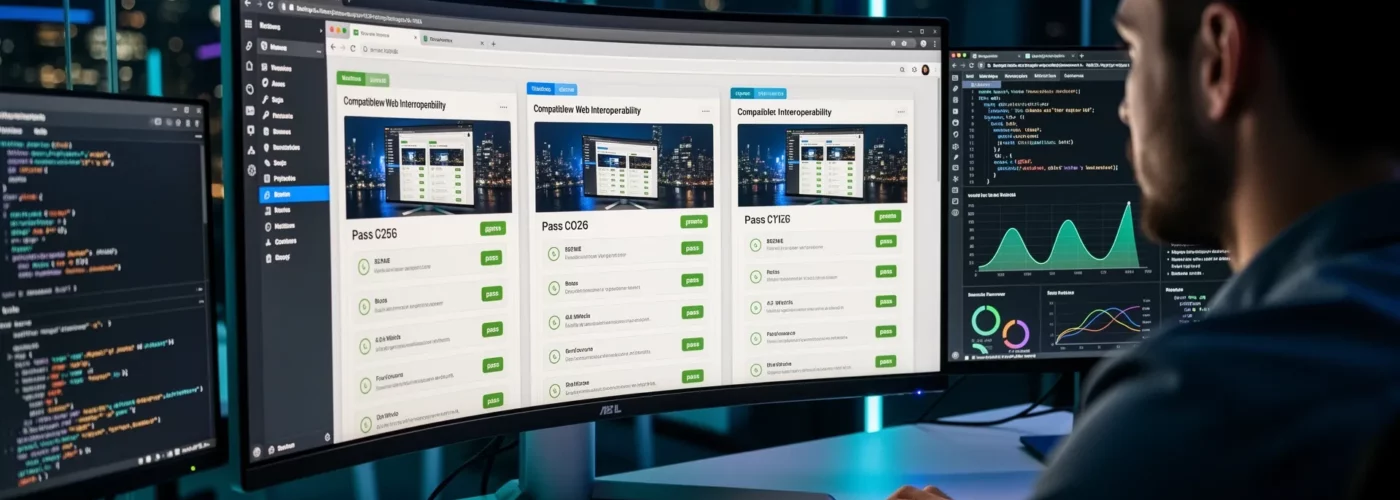
The Evolution of Cross-Browser Web Development
The landscape of web development has transformed dramatically as we move through 2026, with browser interoperability taking center stage in the global push for standardized web experiences. The annual Interop initiative continues to drive meaningful progress toward a web where developers can build once and deploy everywhere, regardless of the browser platform.
This year’s focus areas represent a careful balance between emerging technologies and foundational improvements that impact developers’ daily workflows. The collaborative effort between major browser vendors has intensified, creating unprecedented alignment on web standards implementation.
Key Focus Areas Shaping Modern Web Standards
Advanced CSS Layout and Styling Capabilities
CSS continues to evolve with sophisticated layout mechanisms that simplify complex design challenges. The emphasis on CSS Grid enhancements and Flexbox refinements addresses long-standing developer pain points. New properties for container queries and cascade layers provide granular control over responsive design patterns.
Modern CSS frameworks are increasingly leveraging these standardized features, reducing the need for JavaScript-based workarounds. The adoption of CSS logical properties has accelerated, supporting international layouts and improving accessibility across diverse writing systems.
JavaScript API Standardization
The standardization of JavaScript APIs has reached new heights in 2026, with particular attention to performance-critical features. Web Workers capabilities have expanded significantly, enabling more sophisticated background processing scenarios. The SharedArrayBuffer improvements facilitate advanced multi-threading architectures previously reserved for native applications.
- Enhanced fetch API capabilities for streaming and offline scenarios
- Improved WebAssembly integration with JavaScript modules
- Standardized import maps across all major browsers
- Universal support for top-level await functionality
Web Components and Custom Elements
The web components ecosystem has matured substantially, with consistent implementation patterns across browser engines. Shadow DOM performance optimizations and declarative shadow DOM support have simplified component development workflows. Custom element lifecycle management has become more predictable, reducing common integration issues.
Framework-agnostic component libraries are flourishing thanks to improved interoperability standards. The ability to share components between different application architectures has revolutionized enterprise development strategies.
Performance and Accessibility Improvements
Core Web Vitals Alignment
Browser vendors have achieved remarkable consensus on Core Web Vitals measurement methodologies. The standardization of Largest Contentful Paint (LCP) and Cumulative Layout Shift (CLS) calculations ensures consistent performance metrics across platforms. First Input Delay (FID) measurements now provide more accurate user experience insights.
These improvements enable developers to optimize with confidence, knowing that performance gains will translate consistently across different browser environments. The alignment has simplified performance monitoring and optimization strategies significantly.
Accessibility Feature Parity
Accessibility support has reached new levels of consistency, with standardized screen reader interactions and keyboard navigation patterns. ARIA implementation has become more reliable, reducing the testing burden for accessibility compliance teams.
The focus on programmatic accessibility testing has resulted in better developer tools and automated validation capabilities. Color contrast calculations and focus management now operate identically across browser platforms.
Developer Experience Enhancements

Debugging and Development Tools
Cross-browser debugging workflows have been streamlined through standardized developer tool APIs. Source map handling improvements ensure consistent debugging experiences regardless of the browser environment. The standardization of performance profiling interfaces has simplified optimization workflows.
Error reporting and stack trace formatting have achieved greater consistency, reducing the cognitive load when switching between development environments. Console API enhancements provide more detailed diagnostic information.
Progressive Web App Capabilities
PWA features have reached unprecedented compatibility levels, with service worker implementations showing remarkable consistency. Background sync capabilities and push notification handling now operate reliably across all major platforms. The standardization of web app manifest processing has simplified installation experiences.
- Consistent offline functionality across browser engines
- Standardized app icon and splash screen handling
- Universal support for web app shortcuts and protocols
- Aligned implementation of background execution limits
Security and Privacy Standardization
Security feature implementation has become more predictable with standardized Content Security Policy (CSP) handling and Permissions Policy enforcement. Cross-origin isolation mechanisms now operate consistently, enabling advanced features like SharedArrayBuffer in secure contexts.
Privacy-focused features such as the Privacy Sandbox APIs have achieved cross-browser support, providing developers with standard tools for privacy-compliant advertising and analytics. Cookie handling and SameSite enforcement show remarkable consistency across platforms.
Looking Ahead: The Future of Web Interoperability
The momentum built throughout 2026 sets the foundation for even more ambitious standardization efforts. Emerging technologies like WebGPU and advanced WebXR capabilities are already showing promising alignment between browser implementations.
The collaborative approach established by the Interop initiative continues to evolve, with more granular testing methodologies and community feedback integration. The focus on real-world developer scenarios ensures that standardization efforts address practical development challenges.
As we progress through 2026, the web platform demonstrates unprecedented maturity and consistency. Developers can build with greater confidence, knowing that modern web standards provide reliable foundations for innovative applications across all major browser platforms.

No comments yet — be the first